This big ol’ goofy world

My dearest reader, who doesn’t write,

I’ve been thinking lately about worlds underneath the world—Gaiman is wonderful for that, as of course, was Rowling. Clive Barker does that well with the parallel world of Ararat (of course, terrifyingly in his other books),  and I suppose that is part of the framing of many zombie and other un-dead stories—the idea that there is another reality lurking right beneath the one in which we go about our lives. I really enjoy Latin American Magic Realism for the same reason—that there is magic right below the surface.
I wonder why this appeals to us?
Sometimes, this brings us back to the world we had when we were children exploring it for the first time, when it was all new and crystalline.
Sometimes, it just shatters the mundane, dull, inanity of this working day world which we find so numbing.

I don’t know about magic, and I don’t believe I have ever really gone looking for it.
I only know the reality of the world as I live in it, and it is as filled with wonder as a good cookie is filled with chips and nuts.

Let me give you an example:
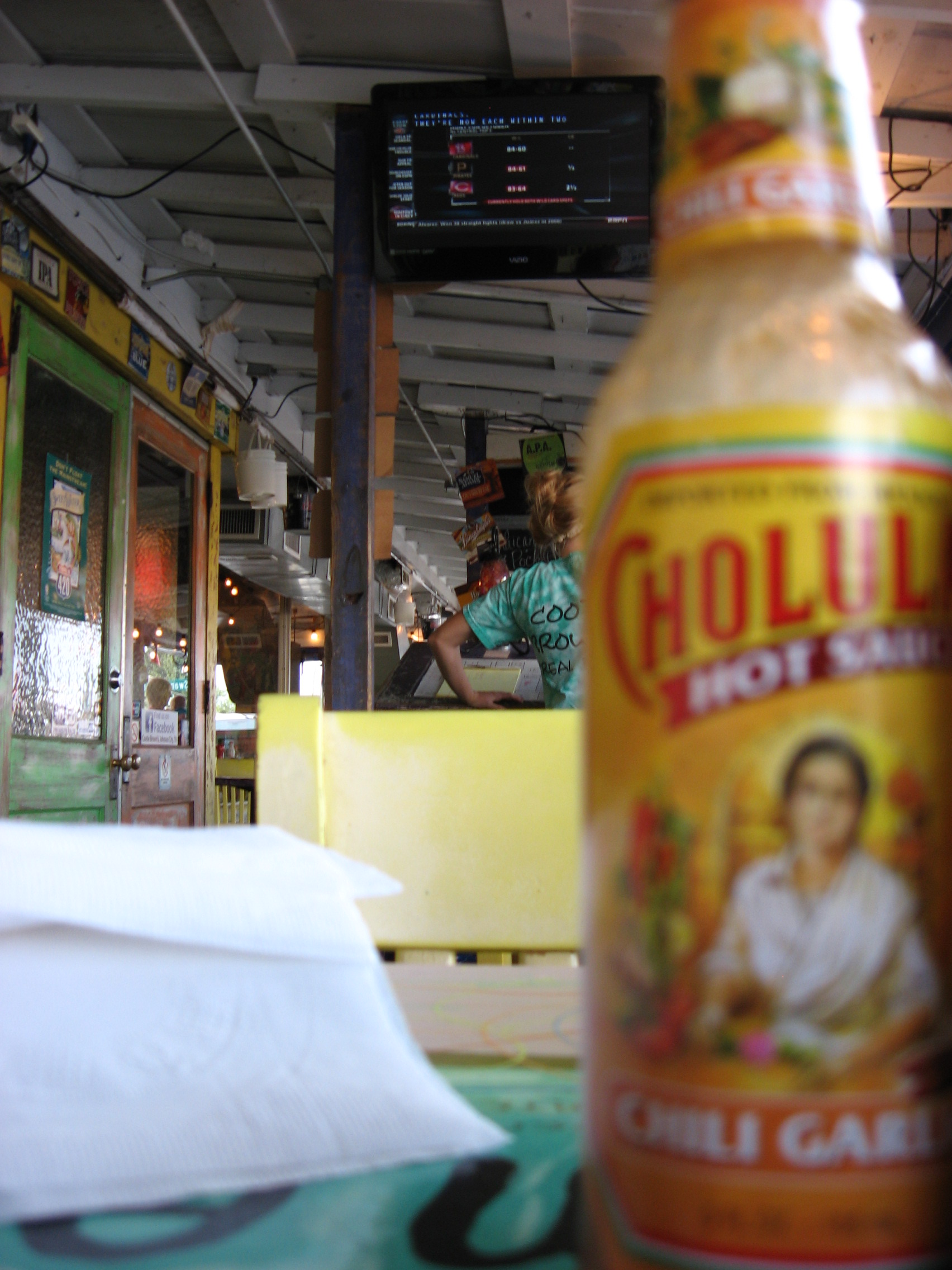
I can sit at a table in Cootie Browns and watch the solidity of my glass,Cootie Browns (5) the table, the college students playing at wait staff, the Arsenal match on the telly. It is all quite pleasantly normal, and the Middle American wasteland of North Roan Street beyond it is frighteningly normal.
But if, after Cootie Browns, I turn left and go two blocks, suddenly I am in a different world.
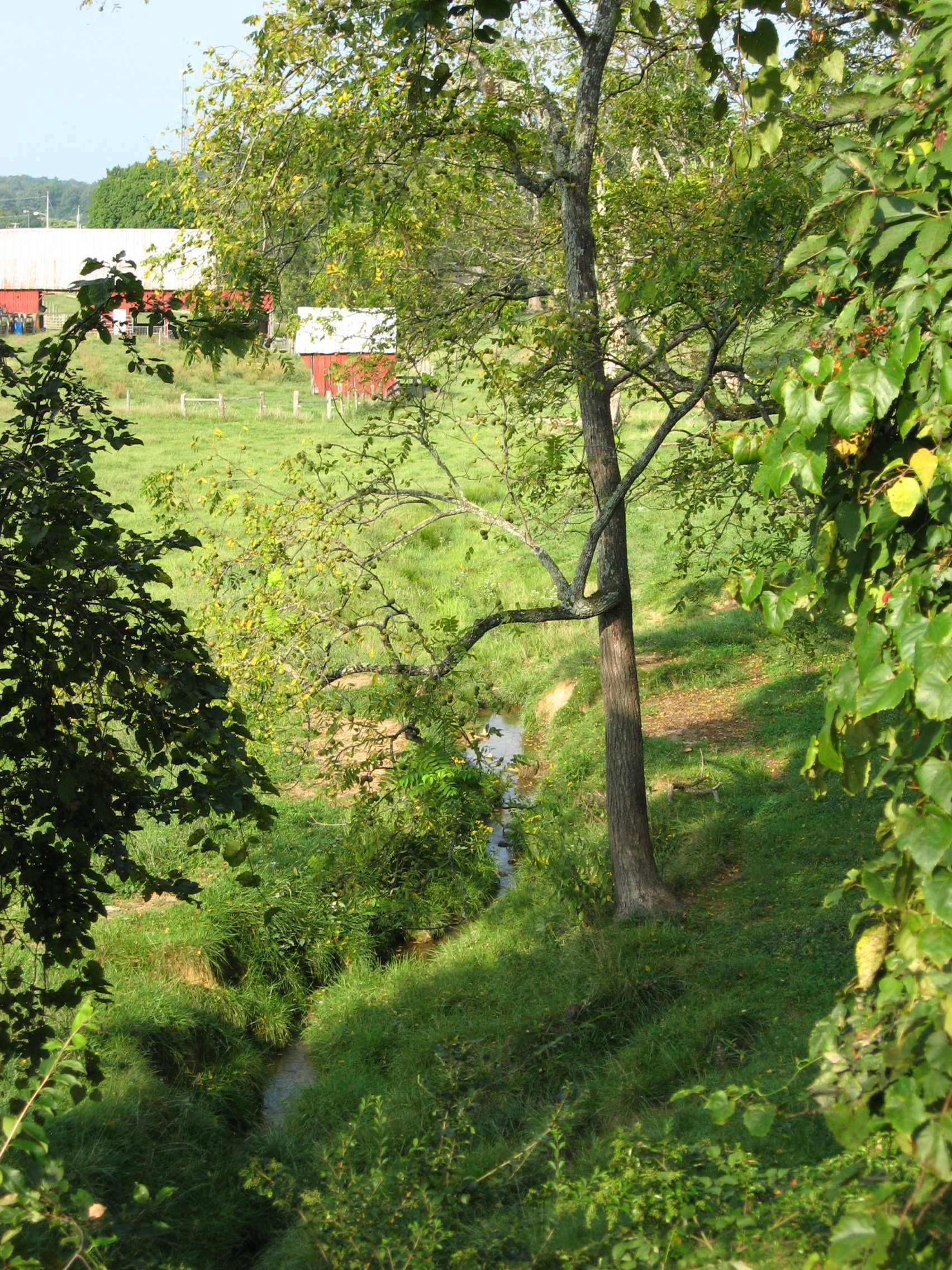
Dairy Farm best 1There is a creek slowly winding its way through the grass, cutting banks into the clay and stone, over-shadowed by tall trees. There are birds singing, and dragonflies buzzing in the sun and shadows. In one tree, I can see more bluebirds than I have ever seen at one time—at least a dozen.

There is a well-tended but worn red barn, and in Dairy Farm best 4little knots in the grass, there are muddy white cows going about their lives, calmly unaware of the radical incongruity of being surrounded by a town.
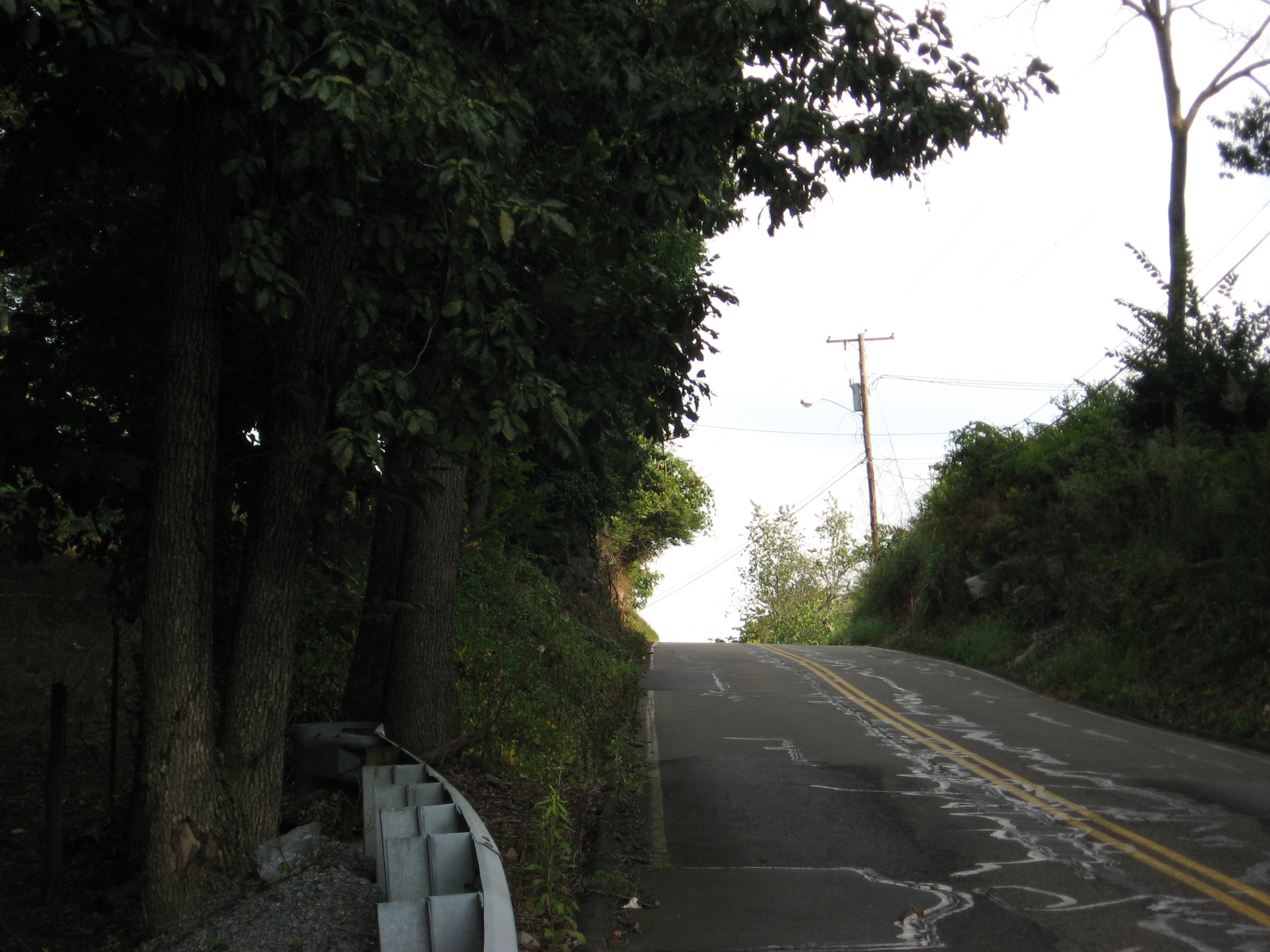
Stranger, however, is the little self-contained world that meets me if I turn right instead of left.
Behind the Honda dealer, and down the hill, in the shadow, there is a darker world, another city.
The first time I stumbled across it, it seemed like a little medieval village tucked away, out of view. There are car dealerships, shops and restaurants all around, but here are several blocks of trailers that form their own city within the city, with its own roads and rules. In the hollow, the street winds down into Spring City.
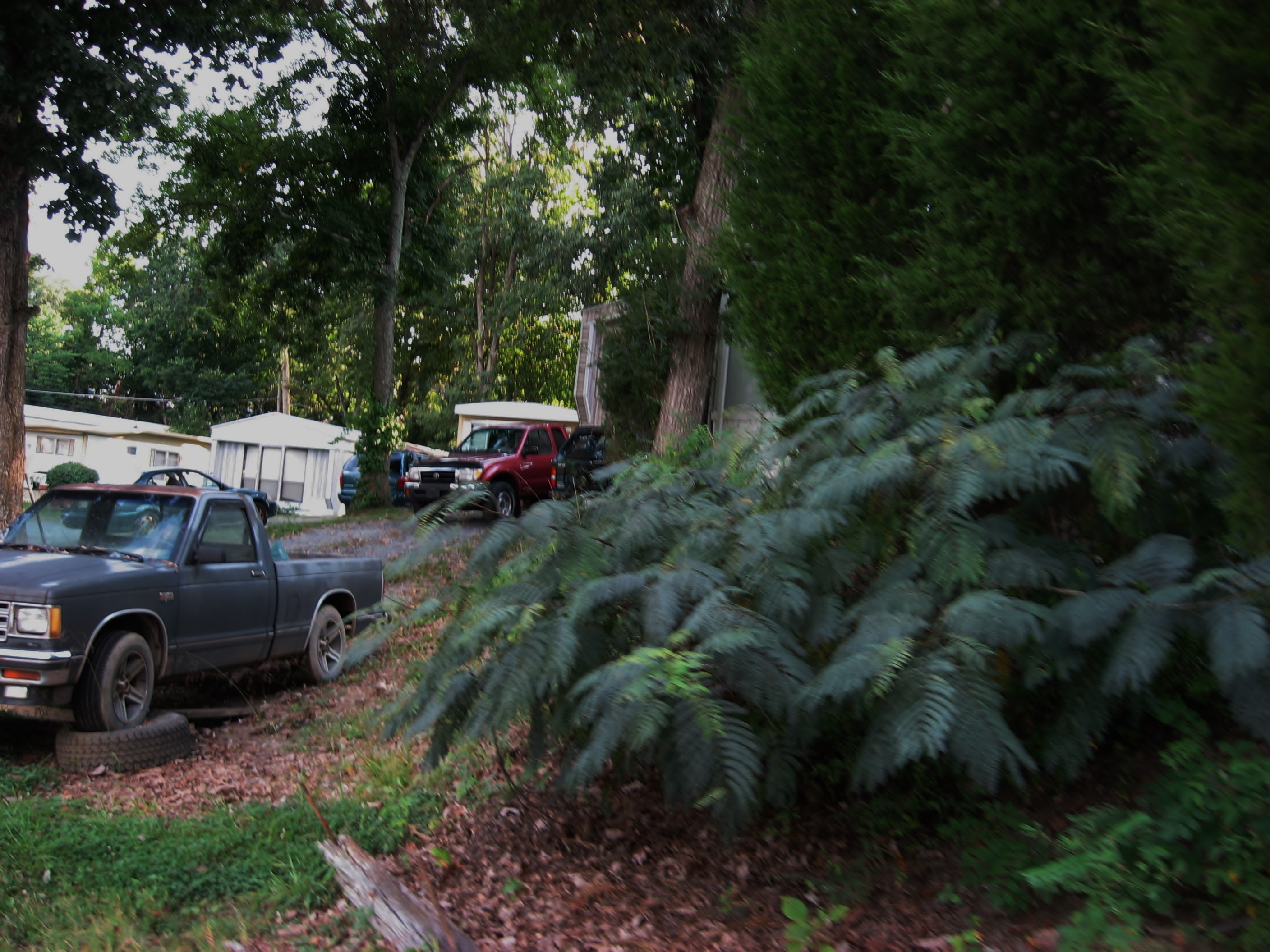
Spring City Trailer Park (1)The street winds around, and turns off into gravel roads that become dead ends and driveways, little homes gathered together and looking inwards. By the dozens, these trailers are close by each other, and are shaded over by big trees, so that it always seems a little darker in the narrow twists and turns of Spring City. As you would expect, there are run down trailers and run down cars and run down people, but here and there you also see well-tended places, happily and tackily decorated with octopus’s gardens of planters and lawn jockeys. I have a friend who is a probation officer who has had clients here, but I suspect there are also folks here who have their own notion of order, and would handle minor disturbances on their own—not that the police are never called in.
Children play, running or riding old bikes, and people sitting on their stoops watch me as I walk by, inhaling from their cigarettes and letting out the smoke without ever taking their eyes off me. I pass a big truck full of furniture, because every day somebody is moving in or moving out of Spring City.

I have been a lot of places. I can spot elephants in the stones of European cities, but I have also spotted live giraffes as I have driven to Knoxville, and completely new worlds walking through Johnson City, Tennessee.
My dreams often seem dull, because my waking world leaves me marveling.912signature marvel
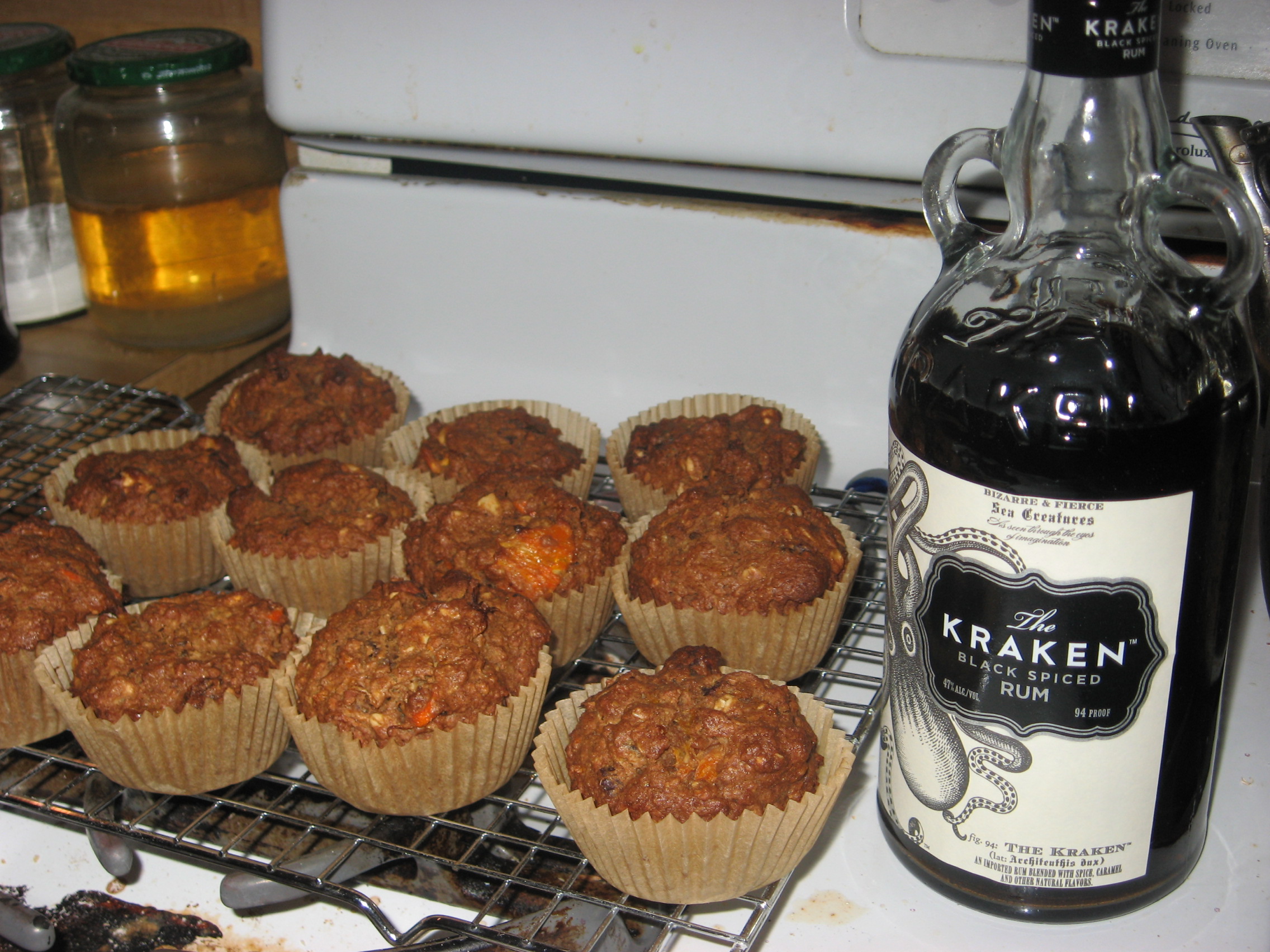
Pirate Muffins (aka Krakenmuffins)

Just a reminder:
NTLP Day 2012 - CopyYom Kipper may be Friday, but National Talk Like a Pirate Day is a week from tonight. Now, I could have waited and posted this then–that will be when we will be leaving them unguarded on the counter at the Philosophy Bistro–but then ye filthy bilge-rats would not have the time to be bakin’ yer own.
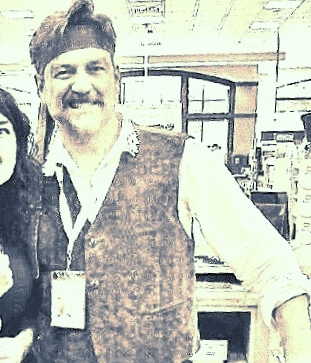
Should I dress up again?

Ingredients:

  • 1 cup TVP
  • 1 cup rum (approximately)
  • 2 cups flour (Whole wheat, white, both, as you wish)
  • ½ cup of sugar
  • 2 tsp baking soda
  • ½ tsp salt
  • ½ cup brown sugar
  • ½ tsp cinnamon
  • ½ cup rolled oats
  • ½ cup walnuts
  • 1 cup diced apples
  • ½ cup chopped golden raisins
  • 2 cup cooked sweet potato (I like it baked, but I assume canned will do)
  • 3 eggs
  • ½ cup buttermilk or Greek yoghurt
  • ½ cup oil (it might work without this; I liked making it with coconut oil.)
  • 2 tsp. vanilla

Step 1: the TVP: This can be done earlier. Measure out a cup of TVP, and cover it with the rum. Let it soak, so the TVP absorbs the fluid. If you are a teetotaler, substitute something interesting.

Step 2, Prepare Ye the way: Preheat the oven to 350°, chop the apple, either grease the muffin tins or put in the cupcake liners (I usually spray a little canola oil in the bottom of these to make things come out easier). I get 2 dozen medium sized muffins out of this mix.

Step 3, sifting the dry ingredients: In one bowl crumble up the brown sugar and the oats, then sift (mix if you don’t have a sifter) in the flour, white sugar, baking soda, cinnamon, and salt. Mix thoroughly.

Step 4, mixing the wet ingredients: In another bowl, mix the TVP, the apples, the raisins, sweet potato, vanilla, oil, eggs and buttermilk.

Step 5, combining the big mess: Add the dry ingredients to the wet ones and mix well. You want to make sure the individual bits of apple are each coated to keep them from getting too clumpy. The consistency should be much firmer than batter, but a little more liquid than cookie dough.

Europe 2013 007Step 5, baking: Fill two dozen or so muffin tins. Bake at 350 degrees for 30 minutes. See how they look. Stick a toothpick in one and see if it comes out battery.

Step 6, gratuitous pirate joke: What is a pirates favorite letter?
You would think “Rrrr,” but no; a pirate’s heart belongs to the “C.”

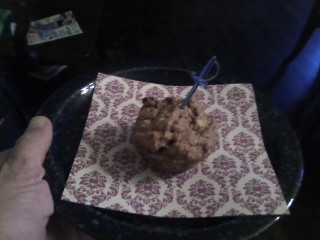
MuffinsStep 8, sharing: Oh, make them work for it. Bury the muffins on a deserted beach, leaving the only map in possession of a drunken, cursed first mate. or just tie them to the parrot.

Sensuality, continued.

We Americans are a rather hedonistic culture, placing a high value upon comfort and pleasure.
The sad thing is, we are not very good at it.
We are not very good at being hedonistic, because we really don’t understand how to use our senses.

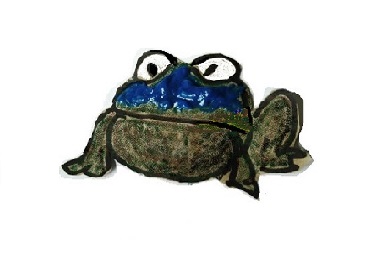
Any trip to most American restaurant will prove my point—there are huge servings, and way too much salt, fat, and sugar, but there isn’t really that much sensual pleasure to be had. We have made gluttony a national past-time and, at the same time, a chore. In fact, the reason we need so much sauce (besides the low quality of the ingredients—Damn you food industrial complex! Damn you to hell!….Wode-Toad-color-miffed.jpg

                                                ***SLAP!***

But I digress. Thank you, Wode Toad.

The reason we need so much sauce is that we don’t really taste our food. We don’t take the time to find out what the flavor of each item is. We allow our food, our music, our body washes (Thanx, Axe), our entertainment, our sensual experiences (Thanks, 50 Shades) to be over-blown and way too loud, going for quantity, but not enjoying the full array of sensations each moment can bring us.

Among the problems is that we put so much priority upon sight and sound—the least intimate of all sensations—have we barely are aware of the wide variety of input of our other senses.

I already talked a bit about taste in the recipe section, but what of the others?

Step outside. Feel the sun on your face. Close your eyes, and feel the sunlight soal into you as if you are absorbing it, the way a tomato does. Breathe in, and try to figure out how many smells there are in each breath. Dogs absorb most of their information through smell, whereas we tend to ignore this sense entirely. Is there fresh mowed grass? The early browning of tree leaves? New flowers? The roads and sidewalks baking through the afternoon sun?
Or just exhaust and different cigarettes? Can you smell the different smells of the city? At a distance, even unpleasant smells can be interesting—the faint smell of skunk on a summer night is one of the smells in very good coffee.
Speaking of that, how do you drink coffee? Do you feel the warmth of the cup in your hands, look at the rainbow-mottled surface of the liquid (of course there is oil, ya’ mook! Essential oils provide most of the flavors we enjoy), add sugar, and feel it as you drink it—each cup involves taste and smell and sight and feel.

Stretch.
Take a moment and feel different muscles tighten and untighten as you stretch. Tense and relax, and feel your body.
At work, take a hop and then break into a run; feel your legs stretching beneath you as you dash.
Jump up under a tree, grab a branch, and pull yourself up; you will be aware of each part of your body as your feet hunt for new footholds and your hands swing across branches amd you taste and smell each leaf and bark.

Dance! Throw yourself into wide, wild abandon as you feel the rhythm pounding through your body, and your boots against the floor.

Recipe for Sensuality

Ingredients:

  • 1 Cucumber
  • 1 Tomato
  • 1 Carrot
  • Mixed Salad Greens
  • Salt to taste

Step 1: Have a seat; you are going to be here for a while. The two main ingredients will be time and attention; the main tools you already have with you: your senses.

IMG_2984Step 2: Find a good, preferable fresh and local, but really good cucumber. Cut a thin slice or two off it. Hold it up to the light—already the juice from the cucumber will be forming in little drops on the outside. Place it on you tongue, and try to think about the flavor. Breathe through both your nose and your mouth, so you can get the full smell. The flavor of a cucumber is subtle, but unmistakable. Slowly chew it, letting it melt into your mouth. Try nibbling the next one from the outside in—how is the surface, then each layer, different in taste? Try a thicker slice; doesn’t it taste differently? How about if you just take a big bit out of the unsliced cucumber? If you add just a little bit of salt—just a little bit!—how does that change it? If you don’t over-power it, the salt might enhance the flavor.
Pause.
Slowly finish the cucumber.

Step 3: Take a sip of ice cold Prosecco DOC.

Step 4: Find a fresh tomato, preferably still warm from the sun. TomatoSmell it—the stem and leaves of a tomato have a sharp, harsh scent, and if the tomato is fresh you can still smell them, as if you were standing in the patch (you could, of course, be standing in the patch—that would be even better, unless it is your neighbor’s, in which case, please keep your eyes open).
Feel the weight of it in your hand, the firmness of the skin as you roll it in your palm. Feel its skin against your cheek, then your lips. Feel the elasticity of the skin against your teeth, and then the sudden give of puncture and bite. Suck in the juice & seeds, feeling them against the back of your throat, swallow and then laugh.
Pause.
Continue as needed.

Step 5: How about another sip of wine? Maybe you should get a napkin to clean up.

Step 6: Find a fresh carrot, and scrub it thoroughly. Take a big bite of it, and chew it IMG_3002thoughtfully. Is it sweet? Is it bitter? Chew it slowly, breathing, again, through both your mouth and nose, to let the air flow across it.
Try slicing it thickly. It tastes differently, doesn’t it? Eat it slowly, nibbling from the outside in, and savoring each part.
Try shaving it with a vegetable peeler, and eating the long peelings. Again, it tastes differently this way—more sweet, but also more insubstantial and faint.

Step 7: Eat the salad greens one by one, pausing before going on to the next leaf. IMG_3003The solid reliability of leaf lettuce, the peppery-ness of arugula, the firm, thick green taste of lettuce—each is different. Try just a hint of salt. Does this enhance, or just mask the flavor?

A Hard Place to Do Anything but Be

K and I went on a hike on Saturday. (For clarity’s sake I should say that K is my wife and “K” is her initial. She is not to be confused with the protagonist of Kafka’s The Castle. “I” meanwhile, is a pronoun and not an initial. I = I, and also me. But I digress.) Our home, Issaquah, Washington, is decidedly suburban, but with the uncommon advantage of abutting the Cascade mountains. Every exit along I-90 offers numerous gorgeous hikes in both directions, none – at least that I’ve yet encountered – more stunning than the one leading to Melakwa Lake.

Melakwa Lake


You get there by taking exit 47, which offers the opposite of a Hobson’s choice. If you turn right you’re on your way toward Annette Lake, itself a delightful destination whose course passes by McClellan Butte, which I think must be named for Union General George B. McClellan. In the 1850s the first governor of Washington Territory, Isaac Stevens, arranged for a survey of a potential transcontinental railroad route from St. Paul, Minnesota to the Puget Sound. Stevens and his party scouted west from their starting point along the Mississippi River while McClellan led a company around both sides of the Cascades, seeking the best way through north of the Columbia River. Since Ken Burns’ PBS special on The Civil War, it’s been all too easy to treat McClellan as a joke, though he probably deserves better. His stellar career in the pre-war military as an engineer led him to a vice-presidency of the Illinois Central Railroad, and his disappointing but by no means disastrous tenure as commander of the Army of the Potomac set McClellan up as the Democratic candidate for President in 1864, when he won a respectable 45% on the vote in the loyal Union states. He shouldn’t be a ridiculous figure. And yet, if you read the account of McClellan’s half-hearted and decidedly incomplete efforts to discover the best pass through the Cascades, including his patented whining and suspicion about his superior’s competence and motives, it’s hard not to laugh at least a little at this brittle and prickly man. Though he did divine the pass – Snoqualmie – that would ultimately offer the most direct route to the Puget Sound, he didn’t actually complete the trek across it and thus confirm that there was a reasonable way through. I’ve never been able to determine for certain that McClellan Butte is actually named for George, but it would be a tremendous coincidence if it weren’t. I like to think that it marks the point of his maximum progress from the west, only five miles or so from the summit. That’s the McClellanite condition in a nutshell: close, but not close enough.

But don’t go that way. Turn left instead and drive to the trail head that will take you rather spectacularly under a high and lengthy I-90 overpass

If I ever make a Pacific Northwest version of Mad Max, I’m setting a scene here.

until you reach the Denny Creek waterfalls, a rocky playground that serves as the setting for one of the sadder scenes in Garth Stein’s The Art of Racing in the Rain. One weird facet of living in the Seattle area is that not only are there so many published authors here, but a striking number of their books take place in the greater Seattle area. It gets difficult to go anywhere without thinking of a pertinent passage. The stage is thus set for the meta-novel in which many of these fictional characters meet in a unified narrative Seattle and fight it out. But the dozens of kids and adults playing around these waterfalls don’t for the most part know anything about all that. They’re just playing in the water in the woods, the way people in the Pacific Northwest do.

Don’t stop there. Another mile or so up the trail the pines and firs part, revealing a much grander waterfall across a chasm. Don’t stop there either. Carry on up the steeper trail through a hemlock woods to the top of the pass, then descend a steady half mile to a crystal clear green lake cradled by a series of rocky crags. The first time I visited Melawka Lake I wondered how Native Americans had made use of such a beautiful area before European settlers arrived. From my reading since, including Coll Thrush’s Native Seattle, I’ve come to appreciate what should have been obvious, namely that the tribes stayed close to the plentiful food offered by the sound and its tributary rivers. Alpine lakes like Melawka, though beautiful, wouldn’t have provided enough sustenance for lengthy settlement, particularly in the winter. Still, the people living in the area wouldn’t have missed this spot. Surely they hiked miles out of their way sometimes just to experience it. The newest non-invasive archaeological techniques may reveal some interesting finds someday. Or maybe the lake’s visitors will continue being too busy experiencing it to study it. It’s a hard place to do anything but be.

And that’s the news from Lake Melakwa. This is the Philosophy Bistro, so I usually try to draw some sort of lesson. Not this time. The lack of lesson is the lesson. It’s Labor Day weekend, which we usually celebrate by trying not to labor. K and I climbed up from Denny Creek to sit together on the bank of a mountain lake. We didn’t have a reason and didn’t want one. I hope your weekend was as lovely as ours.

Photo credits: monkeypuzzleblog.com, tmber.com


Hello Plato, my old friend.

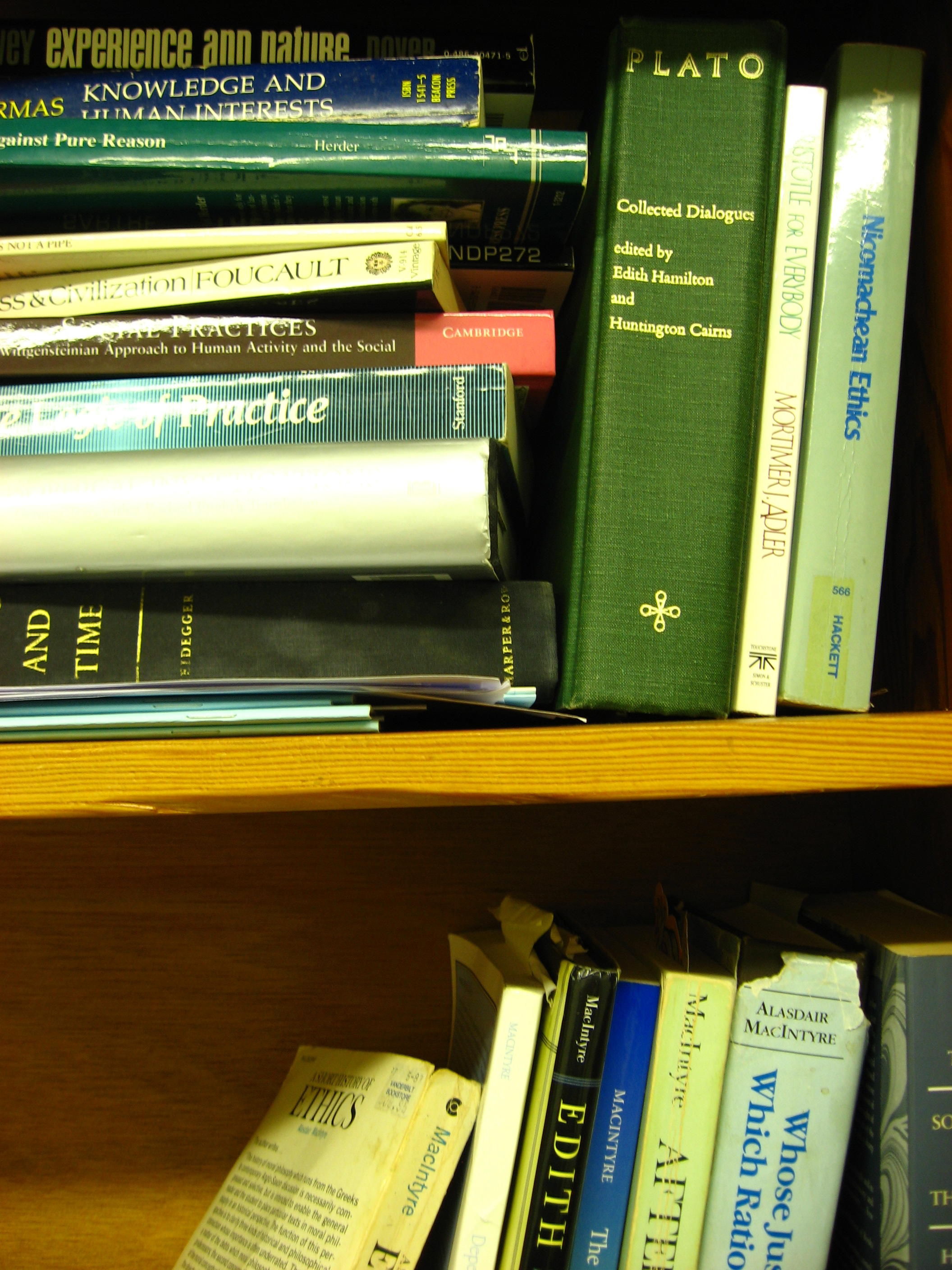
pb 001Although it doesn’t quite feel like it yet in Upper-East Tennessee, it is Autumn, the beginning of a new school year, and I have the good fortune of teaching a college class. Originally, the class was largely Plato and Aristotle, then was expanded into more of a general Ancient Philosophy class, and then became what it is now: How to Live Well: Ancient Philosophy and Enduring Questions.

We begin with Socrates—everything begins with Socrates.

Socrates may have been a brilliant original thinker, or might have been a pernicious troublemaker; he may have been one of the first great martyrs of free thought, or he may have been a dangerous cynic whose students attempted a totalitarian coup of Athens.

Maybe, all of the above.

We don’t entirely know—what we know of him is not a person Socrates, but a character within the dialogues written by a former student. The ideas expressed may be his, or may be Plato’s or may be a game.
We don’t know much of the person Plato—the writings he produced where he spoke for himself have been largely lost, and what we have are a series of dialogues from which we try to infer his ideas.

Yet, we begin with Socrates, because Socrates asked questions. He asked questions, he took answers, and then he said “but wait….that doesn’t seem right…” and he asked more questions.
That is how philosophy began.

I like that.

As I struggle through this life longer and longer, I also appreciate what he wanted to ask questions about. How do we live well?
He lived at the tail end of a great empire, a brilliant empire, a scientific, literary, poetic, artistic and beautiful empire.
He lived at the time it was all unraveling, and everybody was uncertain, and everybody was afraid of causing a stir, and nobody knew what was right or what was wrong anymore, or where to turn for answers, and instead everybody went through the motions and was ironic and clever and local and traditional and new at the same time, and the economy was shot, and nobody knew what would happen next.

If you do read any of the Platonic dialogues, bear one thing in mind: Everything is a question.

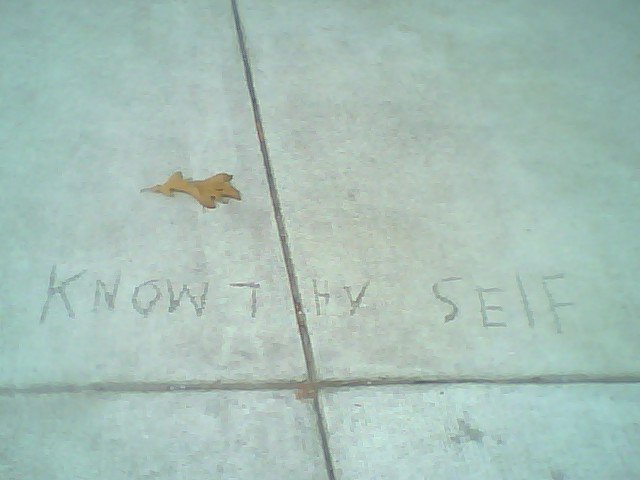
Everything is a question.Know Thyself

The key to reading is trying to keep track of what the question is.
What is the question? What does he mean by the question? Does he mean what we would mean, or does he mean something else? Does he change what the question means in the dialogue? What possible answers are advanced? How and why does Socrates shoot them down?
What are the questions? What are his answers?

Christopher Phillips, the foundr of the Socrates Café movement, characterizes Socrates as always being concerned with 6 Questions:
What is virtue?
What is moderation?
What is justice?
What is good?
What is courage?
What is piety?

That’s not a bad starting point. Those were all good questions to ask 25 centuries ago; those are all good questions to ask now.

The down-side to the class is this: I dislike Plato.
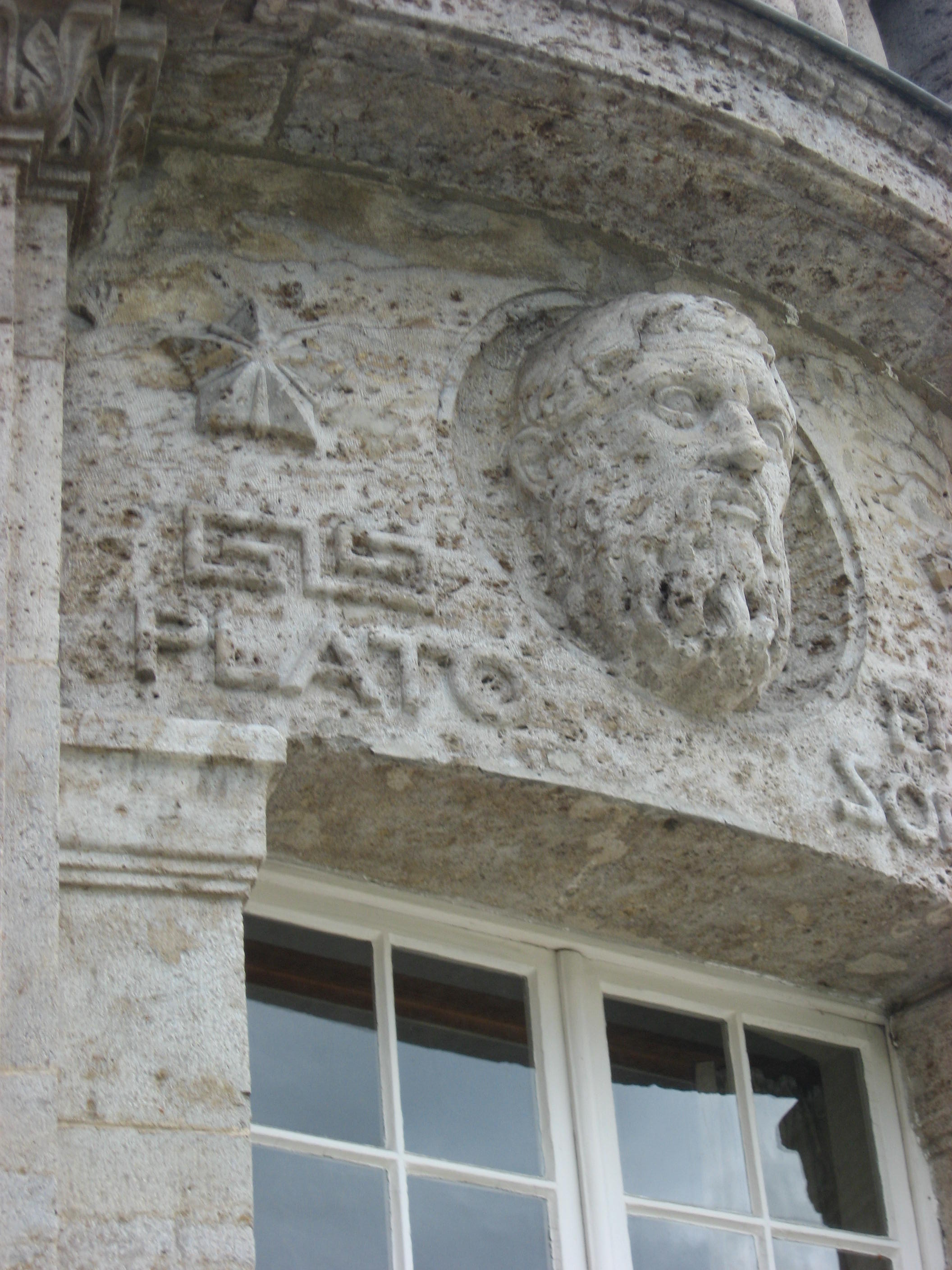
Plato on Library (1)A brilliant student I had in this class a few years back characterized him as seeming really cool at first, but by the end of The Republic, he seems more like a cross between Dr. James Dobson and V. I. Lenin. That’s a pretty bright characterization.

Mostly, though, I dislike his idealism. Plato saves the idea of absolute truth by locating it in a real of ideas or pure forms somewhere outside of the corruption of our day-to-day lives. The material world is secondary, a mere shadow of the real.

I have friends to whom this idealism appeals, and who like to quote Pierre Teilhard de Chardin “We are not human beings having a spiritual experience. We are spiritual beings having a human experience.”  I could not disagree more. I have fought long and hard to stay in this material world, and my scarred and chemically fluctuating body–permeated by my mind to the tips of my fingers, and in turn radiating my mind through cosmos upon cosmos of imagination. I will fight for it, and remain true to it, and have no desire, when it is done, to be cursed with drinking from the river Styx, forgetting all my body has taught me, and starting anew.

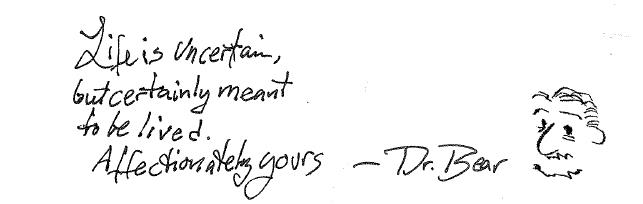
But that is another story for another day.Life is uncertain

Crockpot Apple Butter and/or Sauce

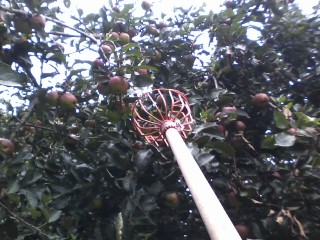
The Virginia Winesaps in my back yard are so full that the branchesApple Harvest are bending over. It’s time to harvest. The apples tend to be very firm, a bit grainy, and quite tart, and aren’t incredibly good for eating, but are great for pies and for apple sauce and apple butter.

Ingredients:

  • 6 cups of peeled and sliced apples
  • ½ cup sugar
  • 1 Tbsp cinnamon
  • 1 lemon

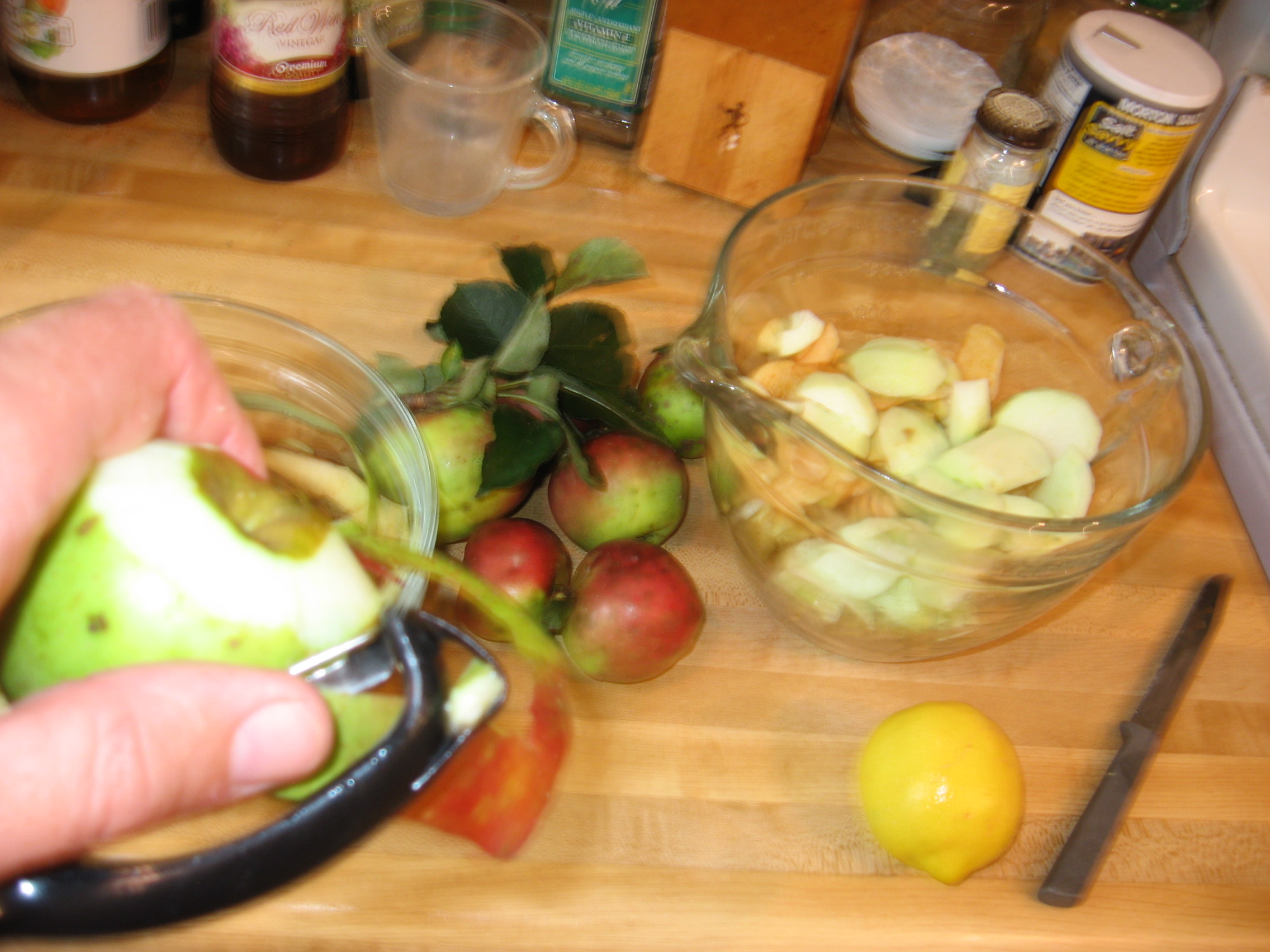
Apple Sauce 002 best  Step 1, the tedious part: Harvest (or buy) several pounds of apples. Find a comfortable place to sit or stand, and peel them, and then slice them into a bowl until you have 8 cups or a little more.

Step 2, mixing it up: Put the apples in a large crock-pot. Add the sugar (more if you like it sweeter, or if the apples are really sour, but I find this is enough), the cinnamon (again, to taste), and the juice of the lemon. If you want to be creative, you might consider adding a tablespoon of ginger, or a half cup of rum, or some cardamom; red-hots if you are that kind.  Mix thoroughly.

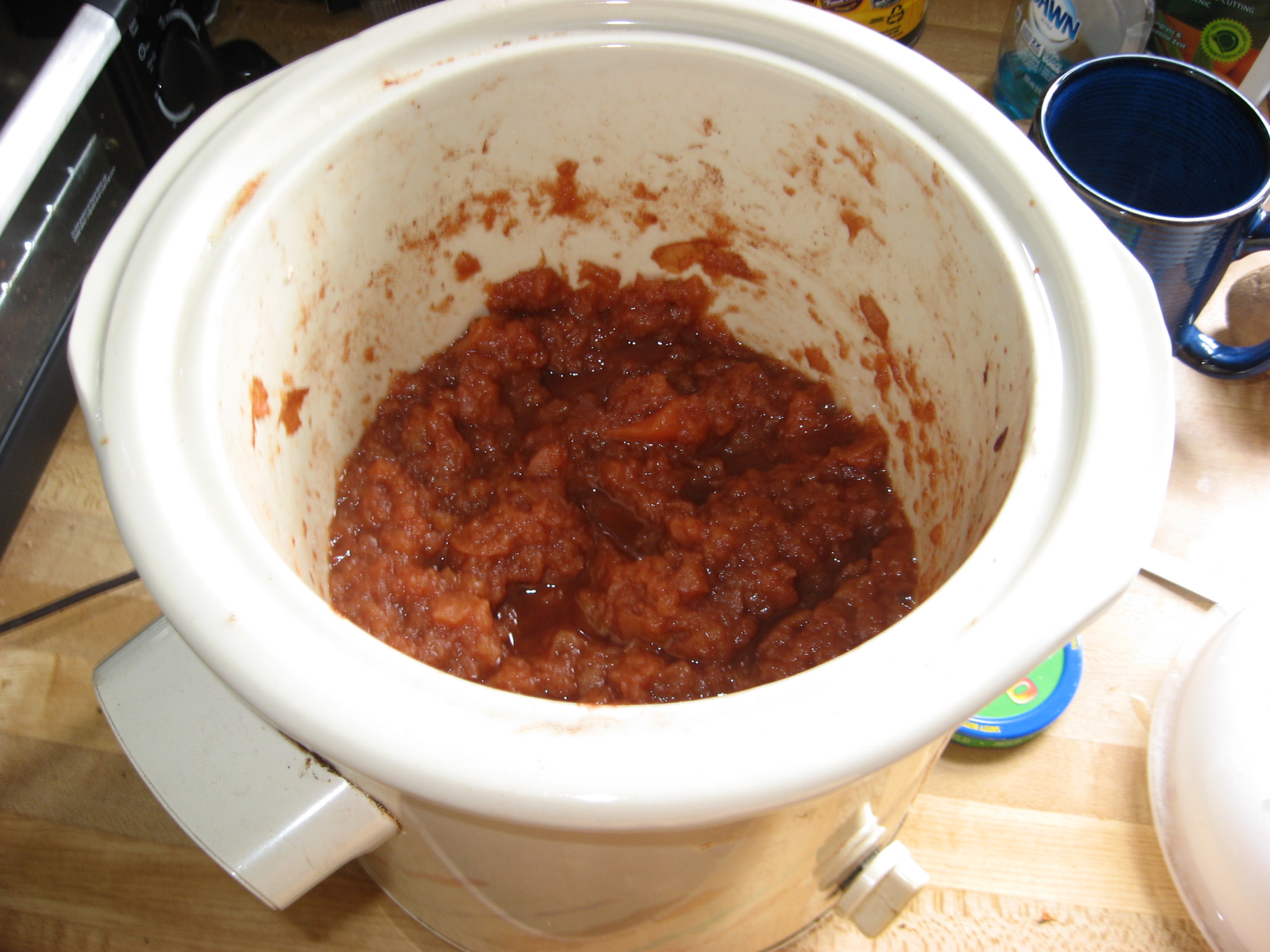
Step 3, cook it down: Turn it on to a medium heat, and let it sit for 6 hours if you want Apple Sauce 004apple sauce, 8 or more if you want apple butter. You will know when it is the thickness that you want. I cooked it down to about 3 cups, which makes it more like a spread.

Step 4, share and enjoy: They are great on toast, or with a scone, or on a sandwich with peanut-butter, or to sweeten tea, or in a Vinaigrette. You can store them in the fridge in cute little jars, or give them to friends. You can take it and some warm baked bread to a class you are teaching, or leave some in the break-room at work.

This Dismal Cairo

On a trip back to Kentucky last week I got to take a two day road trip with my aunt and uncle, primarily to visit Cairo, Illinois. People who know Cairo may find that last clause surprising. It’s not exactly a tourist Mecca. At least there’s no border crossing to get there. One time years ago I stayed with a friend in Duluth, Minnesota, and when he had to work for a couple of days I took a side trip up to Thunder Bay, Ontario for no better reason than its name: Thunder Bay! It sounds like such a fun place, but the name is a lie. As far as I could tell, the city was just a series of strip malls loosely stapled to a two block downtown whose most striking feature was “the world’s largest building designed by a Ukrainian architect.” (I’m relying on memory for that last detail, but if it’s wrong, I assure you that the real answer was comparably weird.) The place was so down and out that merely wanting to go there got me in trouble. Crossing over the border both ways I was asked why I was visiting Thunder Bay, and when I said, “Tourism” I received funny looks and had my car searched for drugs. The border patrol apparently had a policy that no one in their right mind would go to Thunder Bay without an ulterior and illicit motive.

They’d probably think the same thing about Cairo, but fortunately there were no guards on either bridge linking the bottom tip of Illinois to Kentucky over the Ohio River or to Missouri over the Mississippi. In fact, there were scarcely any people at all. I should have known this – I had read that Cairo’s population had dropped from a peak of just over 15,000 in the 1920s to under 3000 today, and I had seen the sad pictures of the decrepit buildings in the old downtown that looked like little more than habit was keeping them upright. What I didn’t realize was that for whole blocks the buildings that weren’t falling down were already fallen. The old avenues by the Ohio levee where saloons and mills bustled around the time of the Civil War hadn’t taken the ghost town turn I expected, but instead had just disintegrated. If you hadn’t known a city had been there, you wouldn’t have guessed it. Much of the scene more closely resembled a quarry than a downtown.

Cities come and cities go, like everything else. The visit saddened me, though, because Cairo was important once, and there’s scarcely any sign left to remember that. Later on the day we saw Cairo we stopped at the Jefferson Davis monument, a 351 foot phallic symbol rising out of the flat lands of southwestern Kentucky, and a stunning reminder of the vast effort the losing side in the Civil War put into memorializing the conflict’s landscape. I can’t help thinking of the quip that we should have put Aaron Burr on the $10 bill instead of Alexander Hamilton, since after all, Burr won the duel. Cairo was the first seat of Union success in the war and there’s virtually nothing there to make that known. The city has been thoroughly Burr-ed.

Check out a map. Cairo hangs there at the very bottom of Illinois, dangling like a stray piece of free soil that the mighty rivers swirling around it could break off at any moment and amalgamate with the slave-holding lands to the south, east, and west. The city is lower in latitude than the Confederate capitol in Richmond, Virginia, and the attitudes of its inhabitants when Fort Sumter was fired upon were scarcely more favorable to a Lincoln-led Union than that geography would suggest. But the Union arrived there in the form of Grant and his army, and from that base they and Admiral Porter’s gunboats made the Mississippi, Tennessee, and Cumberland rivers grand avenues of invasion for subduing the rebel states in the west. While the fighting in Virginia amounted to nearly four years of stalemate the Union steadily ran over the west, and no site was more important to that effort than Cairo. Yet even the park marking the point just south of the city where Grant’s Fort Defiance once stood hardly deserves the name, being little more than one good rain from counting as a swamp.

It’s not as if the victors in the Civil War set up no monuments. Lincoln’s on the capitol mall certainly counts. But still it seems that winning produced less of a desire for memorials than losing did. Perhaps the Union side’s comparative lack of enthusiasm for the war after it was over helps explain why Cairo slowly faded away. Or maybe what we saw last week is just Cairo’s natural state. I don’t wish that to be so, but there’s historical evidence to support the claim. From the earliest European exploration in the area, settlers took it for granted that some great city should rise at the confluence of the Mississippi and Ohio rivers, but repeated failures kept destroying that assumption. Only the Civil War finally produced the investment in infrastructure that made Cairo reasonably large and prosperous, and as the decades wore on and that infrastructure wore out, nobody renewed it, and the prosperity and population departed. Much as Wagner’s music is better than it sounds, Cairo seems a better site for a city than it actually is. Charles Dickens wasn’t fooled. Here’s his description from 1842:

 A dismal swamp, on which the half-built houses rot away: cleared here and there for the space of a few yards; and teeming, then, with rank unwholesome vegetation, in whose baleful shade the wretched wanderers who are tempted hither, droop, and die, and lay their bones; the hateful Mississippi circling and eddying before it, and turning off upon its southern course a slimy monster hideous to behold; a hotbed of disease, an ugly sepulchre, a grave uncheered by any gleam of promise: a place without one single quality, in earth or air or water, to commend it: such is this dismal Cairo.

That’s not going on the brochures. But that’s just as well. We couldn’t find any brochures anyway.


Ireland

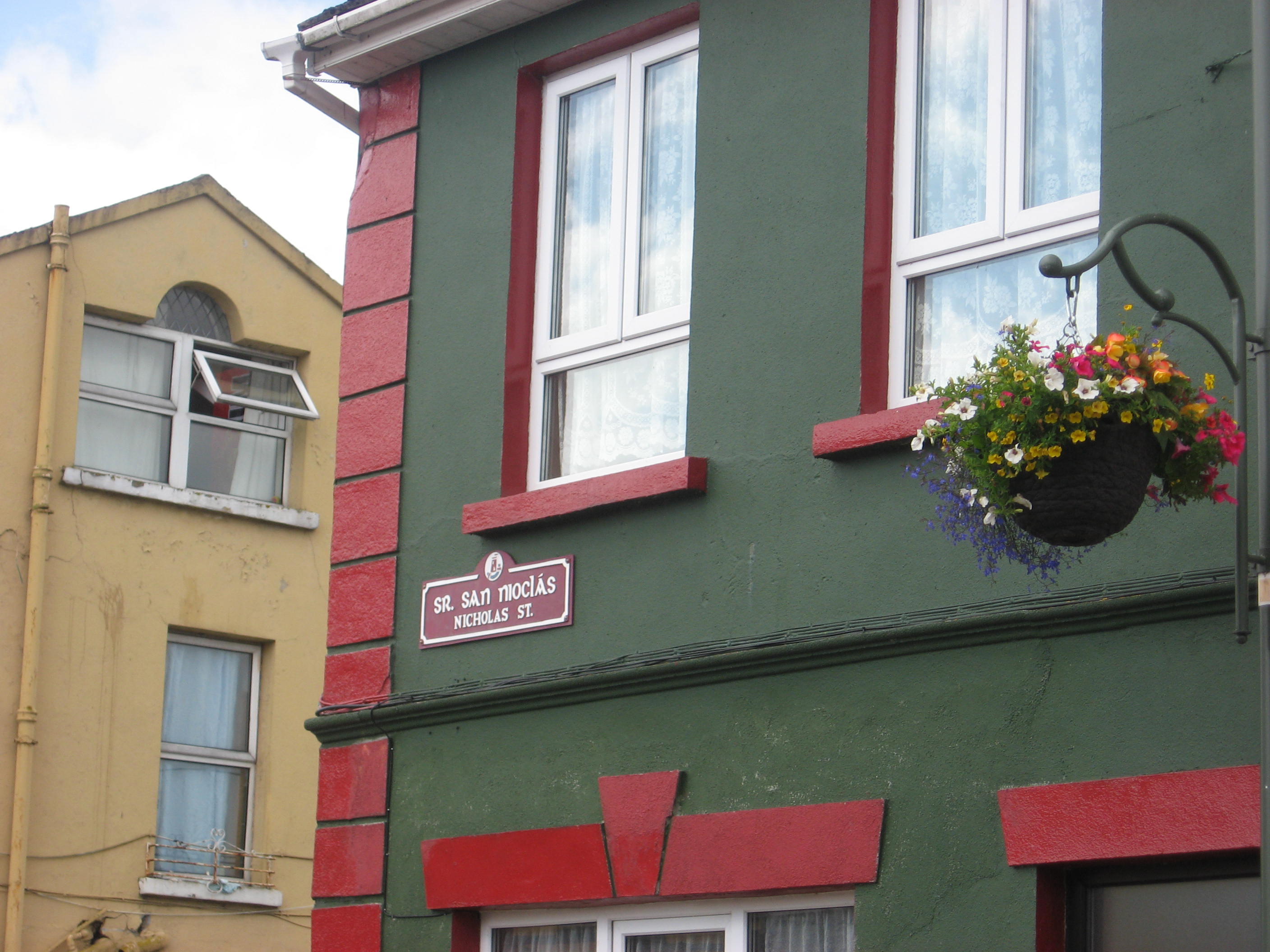
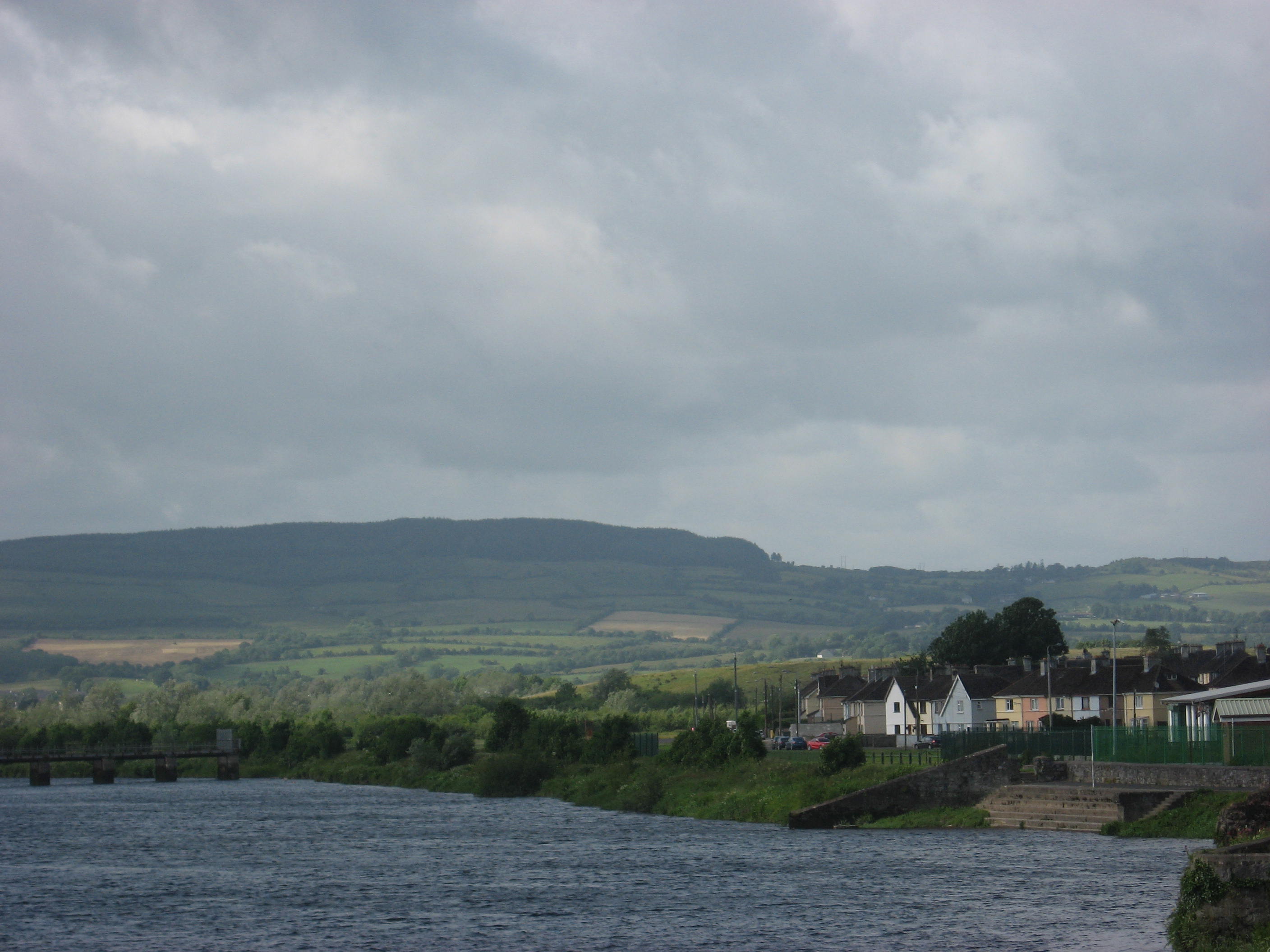
Europe 2013 055It is hard to believe that only a month ago, we were flying out of Charlotte and into Ireland.
Ireland was beautiful and very, very green. It really is called the Emerald Isle for a good reason.

If you have a low tolerance level for quaintness, I would advise you never to visit.

We flew into Shannon, because we decided that we wanted to force ourselves to see the Irish countryside, and were afraid that otherwise we might get stuck just seeing Dublin—lovely in its own right, but a city.Europe 2013 071
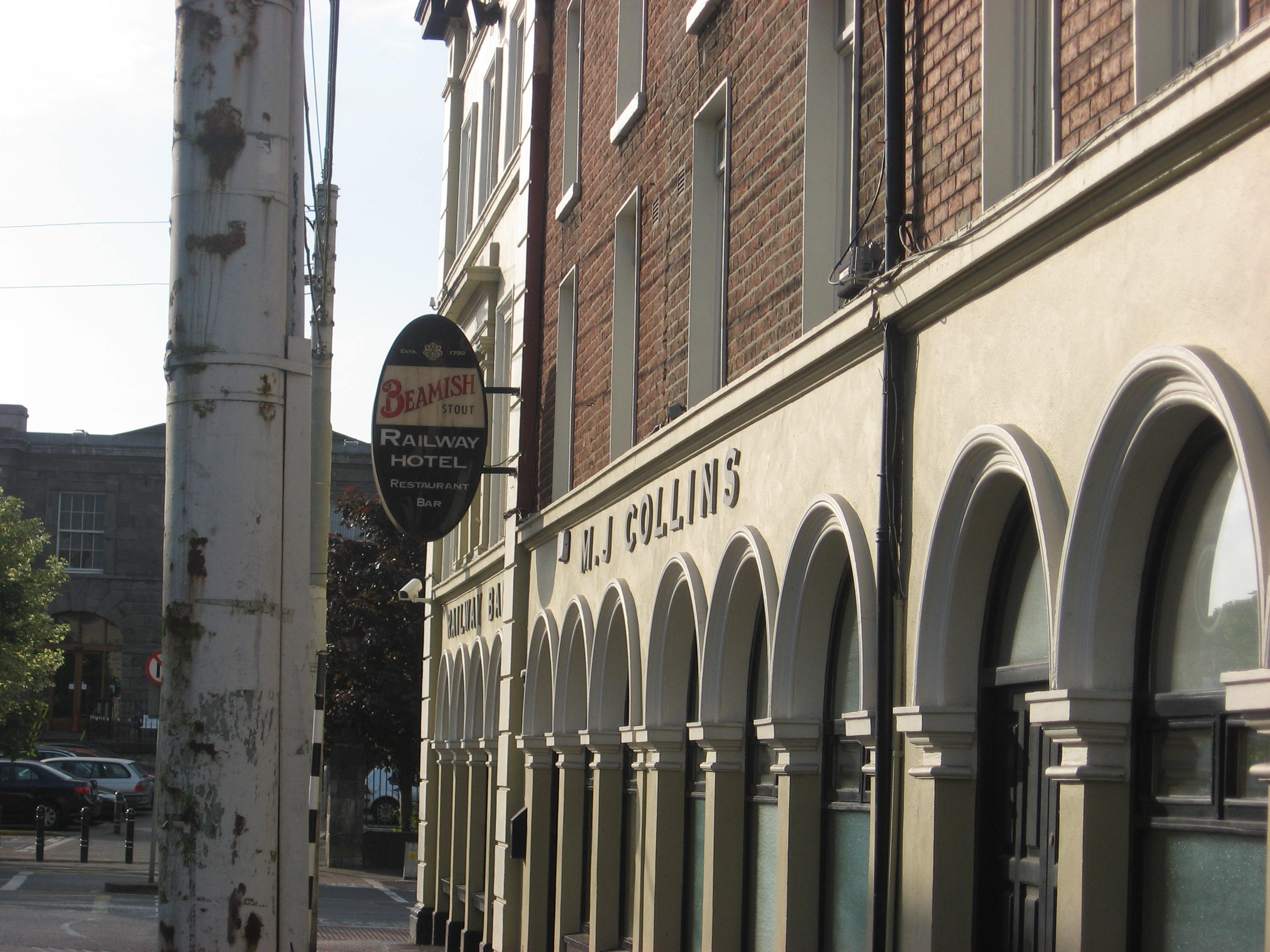
We knew we would be arriving at 6:30 am local time, and that it would feel like 2:30 am to us, so we didn’t have anything specific planned. We managed to find our way to the bus, and climbed up to the second story. Apparently, all Irish (and most Scottish and English) bus drivers are expected to drive like the night bus from Harry Potter—lurching back and forth, taking turns at frightening speeds, etc.—but we were also driving across green rolling hills, past stone cottages & castles, all under a brilliantly stormy sky. We unfolded ourselves at the train station in Limerick, and found the Railway Hotel.
Europe 2013 105The check-in time was 2:00 in the afternoon, and the clerk frowned as we walked in. She suggested we eat breakfast, and I realized she was frowning because she was trying to think of a way to allow us to check into our rooms early. That first breakfast in Limerick was one of the best meals we had—Irish brown bread toast and jam, strong Irish breakfast tea, scones, a full Irish breakfast (rashers? black pudding? white pudding?), porridge—it was so good, I have tried to duplicate the bread.
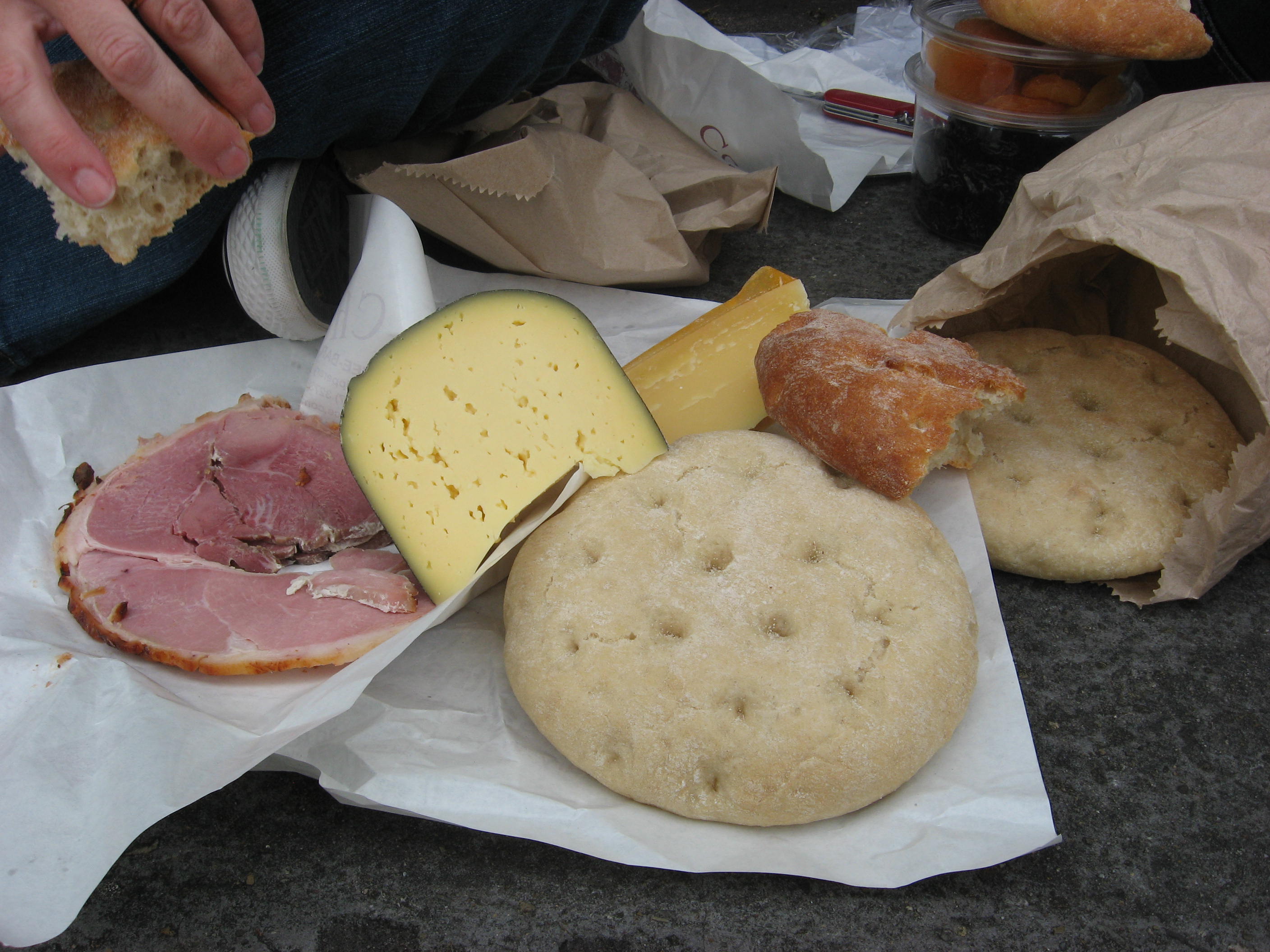
After a nap into the afternoon, we wandered about Limerick, and found a local farmer’s market that was just shutting down. The very Irish and very sturdy Europe 2013 031looking lady behind the counter at the cheese mongers frowned at us, then gave us samples of several cheeses, discussing where each had come from, and how long each was aged, and we left with supplies for a plowman’s lunch down by the wharf.

Again and again, we encountered Irish natives who were friendly and kind—the bartender at the Bram Stocker hotel warning that the people in Cork “spoke funny and are hard to understand,” cab driver who refused to take us as customers—“Oh, I’d be embarrassed; it’s only t’ree blocks, now. Just cross the bridge and through those tall buildings” (I knew how far it was—6 blocks—and I had a 20 pound pack)—although often, the kindness was about fixing something that had gone wrong.
Things going wrong is apparently common in Ireland, and they all seem to have developed what I think of as “a bemused complacency towards the fecked-up-ness of it all” (“Oh, I can’t sell you a ticket on the bus; you can only get those from a machine, and that one there, it is broken. Marvelous!”)

Another odd observation, though: any given block in Ireland seems to have two pubs, a bookie shop, a homeless person or two and their dogs, and a pro-life billboard. It seems to me that there are vices that might be more important to fight than allowing a woman the right to choose, but, then again, Ireland only reluctantly legalized birth control.

It did surprise me that I had trouble getting used to both the stern face and the b.c.t.f., since those are both things with which I face the world. That and the heavy lidded Irish eyes that are part of my genetic heritage.

I did love Ireland.
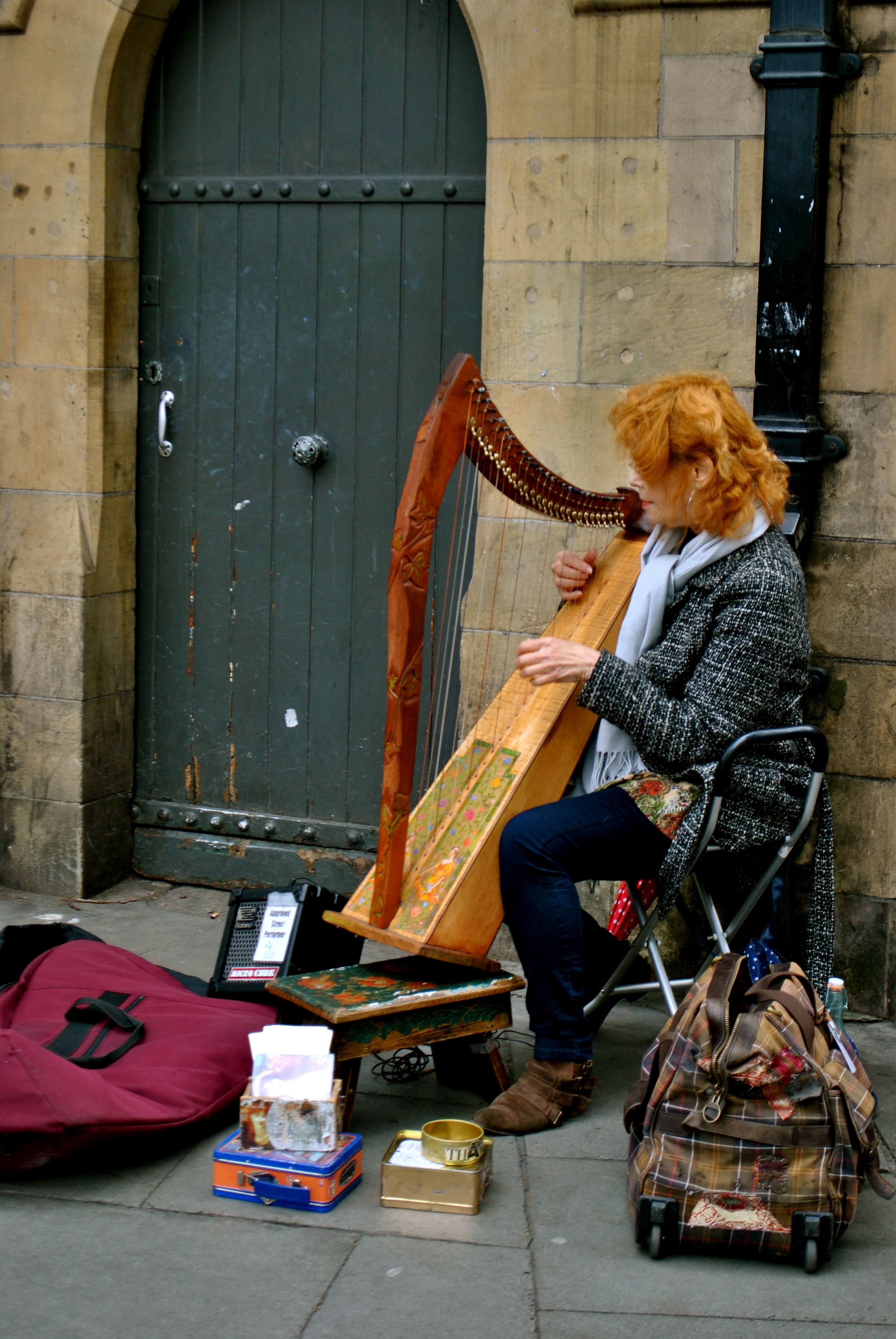
Irish HarpistIt was one marvel after another–a beautiful countryside here, a harpist there, music in a pub, the stormy skies at sunset, the voices–Irish is not so much an accent as a cadence, a lilt, a language sung softly. Kind people, great ale, and wonderful food–yes! the French were polite and the British Isles had good food; re-examine your prejudices!

If you are ever in Dublin, drop by the Murphy Brother’s Ice Cream Shop. They are always smiling.

Of course, who wouldn’t, spending the day around ice cream hand-made in Dingle.
(“hand-made in Dingle” that makes me giggle.)ending321