April Foolishness

My Dear Abby–
Your recent facebook post intrigued me.
Dr Bear in Vest facing rightYou asked “What fiction narratives shaped your life, and how?”
Strangely enough, the first book that came to my mind was Uncle Wiggily and his Friends, which I read–or, rather, which my father read to me, my head against his chest and his baritone voice vibrating through me–when I was 4 or 5. Of course, I admired Uncle Wiggily’s  stalwart adventurousness, and the rabbit gentleman’s unfailing courtesy, kindness, and old world charm. He certainly did have a sense of fashion and personal style, as well. But what really changed my world was how each story would end.

And, if the loaf of bread doesn’t get a toothache and jump out of the oven into the dishpan, next time I’ll tell you about how Uncle Wiggily Learns to Dance.

And in the next story, if the moving picture doesn’t run so fast that it jumps out of the window and scares our cat soshe falls into the milk bottle, I’ll tell you about Uncle Wiggily and the Snow Plow.

And if the snow man doesn’t come in our house and sit by the gas stove until he melts into a puddle of molasses, I’ll tell you next about Uncle Wiggily and The Red Spots.

These statements were just so absurd, so silly, and there they were—in black and white! A book could be silly and crazy! Now, I was used to silliness: my dad and his brothers were silly and witty and droll, as were many of my relativies on both side of the family. However, if I book could be silly, if words on a page in black and white could be silly, then anything was possible. I could be just as silly as my uncles, I could be just as silly as Howard R. Garis or Jim Henson; Life could be relished with a hint of absurdity, its pain dulled with its inherent ludicrousness.

I memorized a book of 101 Elephant Jokes:

What’s the difference between an elephant and a plum?
The color!

What did Tarzan say when he saw the elephants coming?
“Here come the elephants!”

Why do elephants have wrinkly knees?
From playing marbles.

What did Jane say when she saw the elephants coming?
“Here come the plums!”
(She was colorblind.)

I wrote funny plays and drew cartoons in elementary school. I acted all the way through High School and College, my favorites still being Shakespearean Comedy. Although teaching may seem like the ideal stage for stand-up, baby-sitting other people’s kids and then parenting my own daughter were the ideal situations for being silly. The fact is, kid’s are not really that funny or imaginative. However, they can become funny and imaginative if you set a good example. I spent a lot of time clowning and miming and being silly so that my daughter could also grow up to be silly. Besides The Sweet Potato Song, Grace also grew up with tunes like:

Oooooooh The needles are prickley, but the water is fine;
that’s why squid don’t live in the pine!

Oooooooh Opposible thumbs is what they lacks;
that’s why grizzly bears don’t file income tax!

I don’t generally tell jokes–they seem like other people’s stories. I prefer witty or absurdist commentary on a specific context. Occasionally, things like singing about 19th century to a Johnny Cash tune. Or remembering a college friend with a kids’ story. When I do tell a joke, it’s generally something simple like:

Two men walk into a bar. The third man ducks.

It is simple, elegant, almost Haiku-like. It plays on expectations and ideas. And, of course, it has the word “duck” in it, which makes anything funnier.

I also like to tell the story about the unluckiest man in Ireland, but I won’t tell it here because it is too long. It also is the closest I come to saying anything theological, so I only tell it to close friends.

Humor is how I deal with things. By treating big things with a great deal of silliness, it makes them smaller, and takes away some of the fear and power that they have. At my Grandfather’s funeral, my dad and his brothers told old family stories and did Marx brothers routines until we were all crying.

“Talcum Powder, Sir? Walk this way.”
“If I could walk that way, I wouldn’t need the talcum powder.”

I still use it to deal with whatever the world throws at me. Humor has gotten me through grad-school, losing jobs, losing friends, dialysis, heart-break, and might just get me through the current economy.

Tennessee weather: seldom arctic, but often bi-polar.

On the average, Tennessee drivers are the best in the world–on the average.
Of course, that means for every driver going 90 there is one going 15, and for every driver who never signals, there is one who never turn their signal off, and for every driver who cuts you off, there is one who can’t even merge.
But on the average….

Chicago? It has Hipsters the way new York has rats, which I mean, of course, as another point in New York’s favor.

The Little Red Hen?
It’s a children’s version of Atlas Shrugged.

I told my doctor I was depressed. She asked if I had suicidal or homicidal thoughts. I said: “I’m in retail; of course I have homicidal thoughts.”
She said: “I’ve been in retail; that’s perfectly normal.”

Yes, I do specialize in artisan-made hand-crafted snark and free-range organic wit. Yes, I have co-workers and students who show up just to see what crazy thing I am going to say that day. Yes, it sometimes gets out of hand, and I apologize for that…
But only when it gets out of hand and I forget to be kind. Being funny is no excuse, either.

So, don’t be afraid of being silly. FindSmall Arms 001 humor where you can, and make somebody laugh. Making somebody in elementary school giggle is best, but even if you can make a co-worker smile with a silly visual joke like this one…….

……..that’s good too.


…and, unless the iPhone and android forget their social media and are reduced to silence. leaving us to communicate with semaphore ducks, next time we will discuss Slowness and Aristotolian Virtues.

Until next week, I am, and will remain, your silly friend, 44signaturedramatic but funny story-teller, misguided cattle-rustler, loyal knight, obedient camel, elephant, a person who can make you smile, and even LOL, etc.

Peppermouse Cookies

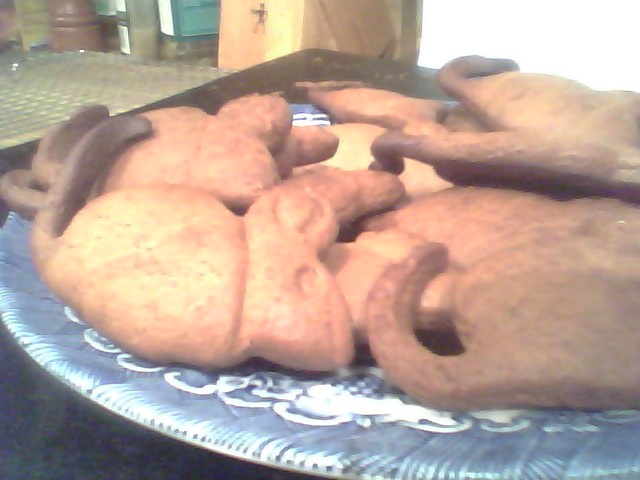
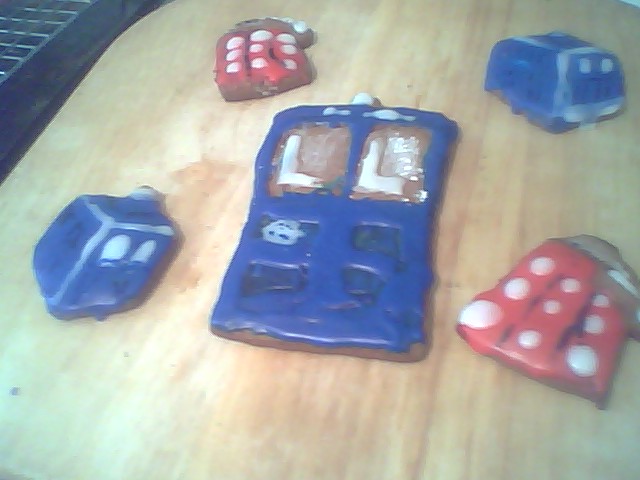
Peppermouse CookiesHey, Whovians! I am finally getting around to publishing my Tardis Cookie Recipe!

This was kind of a Christmas cookie experiment that I played with one day when I was bored. I had had a soup in a Szechuan restaurant that included these spices, and I thought it would be an exotic variation on the German Pfeffernüsse. I needed a wacky recipe because I was making Tardis & Dalek cookies for work, and this seemed good.

Ingredients:

  • ½ cup solid shortening
  • 1 cup sugar
  • 2 eggs
  • ½ cup dark molasses
  • 1/3 cup milk
  • 1 tsp ginger
  • 1 tsp cinnamon
  • 1 tsp nutmeg
  • 1 tsp allspice
  • 1/3 tsp cloves
  • 1 tsp anise
  • 1 tsp black pepper
  • 1 tsp Srirachi sauce
  • Sift in:
  • 4 cups flour (31/2 if not in Tennessee)
  • 1 tsp baking soda
  • 1 tsp baking powder
  • ¼ tsp salt

Step 1, cream: Soften the shortening, then beat in the sugar. Add in the eggs, molasses and milk.

Step 2, spice it up: Mix in the various spices. Leave some out, if they don’t suit your fancy, or add some more, but I do wonder: if you don’t trust me, why are you reading my recipes?

Step 3, sifting: put the flour in a sifter and add the leavening & salt. Gradually stir this into the various wet ingredients. Mix well—it should be stiff, but sticky.

Step 4, chill overnight (always good advice): wrap in plastic and store in the refrigerator.

Step 5, roll and cut it and mark it with a tardis: Preheat the oven to 375. Roll the stiffened dough out on a floured surface, perhaps half at a time. Cut out in shapes (I prefer mice, but also have done Tardis (dredel cutters work) & Daleks (modified Christmas bells); ironic mustaches seem like a distinct possibility). Transfer onto a baking sheet. Bake at 375 for 12 minutes.

Step 6, cool & frost: Remove from pan while still warm, cool on a Dr Who Spice Cookieswire rack, and if you don’t know this should you really be in a kitchen unsupervised? I frosted these with a simple confectioner’s sugar frosting.

If you give a rat some cold pizza for breakfast…

You can make up your own pictures.


If you give a rat some cold pizza for breakfast…


…he’ll probably want some stale beer to wash it down.


He will dig through the ashtrays, looking for a smokeable butt…


….he will sniff through the t-shirts on the floor, to try to find out which one smells the least.


He will gargle with the last of your Scope…


…and then put on way, way too much Polo….


…and he will head to class.

It’s kind of a funny story….

At the bookstore, occasionally a customer will ask if I can recommend a funny book “one that will make me laugh.” My go-to is, at the moment, P. G. Wodehouse, but, at times, I also recommend Tim Dorsey, Gergory Maguire, Christopher Moore (none of whom I have read), or–of course–Douglas Adams (by whom I have read everything). One of my favorite Steinbeck novels is Cannery Row (or it’s sequel, Sweet Thursday), because they are comedies.
What would you recommend? Are there books that make you laugh?

Thoughts on Maundy Thursday

I am a child of autumn; I expect the world to be cool towards me, even chilly, and I am always looking out for the next winter storm. I am not an optimist, nor am I–unless I am really at ease–a touchy feely kind of person. But I do love spring, and I love to be warmed up.

Strangely enough, Maundy Thursday, Green Thursday, the Thursday of Holy Week, the week in the Western Christian year leading up to Easter, was always one of my favorite holidays. This might be mostly for the food, which is featured elsewhere, but is also because so much of the Last Supper distills what is best and most important to the Christian faith. In Germany, Easter in general and Green Thursday in particular is also a celebration of the return of life, of spring, to the world.

The old name—Maundy Thursday—derives from Old French or English corruptions of the first words of the Gospel scripture read at that nights Mass:

Mandatum novum do vobis ut diligatis invicem sicut dilexi vos.
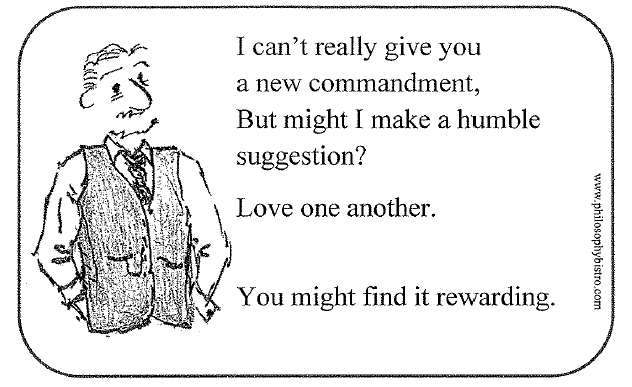
A new commandment I give you, that you love each other as I have loved you.

It commemorates, it celebrates, the culmination of Jesus trying to train his disciples. One more time he tells them to love each other. He tries to reinforce that idea as he washes their feet and shares a meal with them. Love one another. There are legends that the longest living of those disciples, John, at the end of his life, said little more than “Little children, love one another!” The author of one of the Gospels could only summarize his and his master’s life work, his God’s message as Little children, love one another!

But loving is not a new commandment. Earlier in his career, Jesus had taught that all the law could be summarized as Love the Lord with all your heart, mind, etc., and Love your neighbor as yourself. “But who is my neighbor?” you might ask.

When I moved to Nashville, alone and much younger and scared than I could admit to myself, still raw and scarred from my first kidney transplant, it was a strange collection of lesbian and gay neighbors who first ate with me, kept me company and patched me up emotionally. Eventually, my neighbors were a rather strange but true Philosophy department which provided me with a home and great suppers, the staff of an LGBT newspaper I helped with printing and editorial work and with whom I talked almost daily, and the divinity student–deeply religious, yet always trying to act casually about their faith–who inhabited the Disciples Divinity House.
It was a convicted killer who became a good friend and was the best roommate I have ever had; it was a young couple I shared a house with, and lives with, and who taught me how to bake my own bread and honored us by asking us to god-parent their new daughter.

When we moved to Kentucky newly married, it was a wonderful small town congregation that gave us a place to stay and allowed us to be part of their lives. When we had a child, they sent us food—including a whole turkey and a 3-layer pink cake—as well as gentle support and advice. We shared lives with these neighbors, even burying some of them.
In Kentucky, it was also an odd pack of secular humanists at the University who nourished me, providing me with company, support, and even a couch to sleep on in an ice storm.

When I moved back to East Tennessee to wait for my second transplant, it was a quirky little congregation by Buffalo Creek that held me together, sharing a table with us, giving us a place to live and people to talk to. After my transplant, it was also a maintenance and grounds department staffed by North American, Korean, African, Eastern European and Indian seminarians who were neighbors to me.

Now, my literal neighbor is a retired High School coach and Baptist. When I felled a tree across his fence and into his yard, he ran out of his house, and his first concern was: “Are you OK?”
My neighbors are also a fascinating collection of booksellers and barristas who buoy me every day. When the unreality of seeing myself in an antique store sent me spinning, they were the ones I came home to.

Each of these neighbors has come into my life—often not by any choice I made—and has added to that life and made it infinitely richer; at some points, they even made life possible.

Love is a commandment, my Christian friends, but, for all of us, let me suggest that allowing yourself to love and to be loved is rewarding and enriching.Mundi Novum

I don’t know about heaven, my lovely ones, but when I am with you, I am back in a garden.

Peace be with you,

Dr. Bear

Eggs on the Lawn

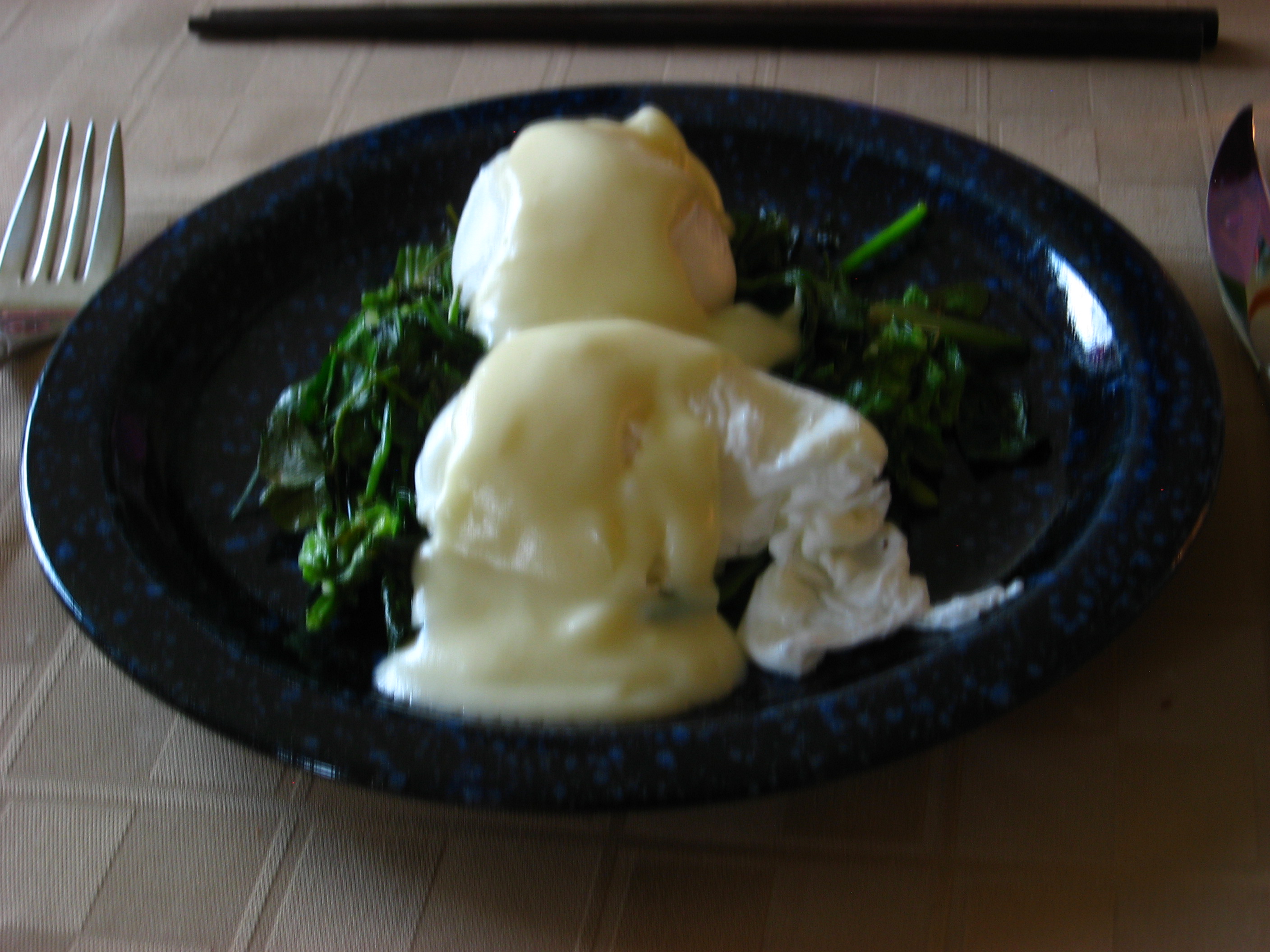
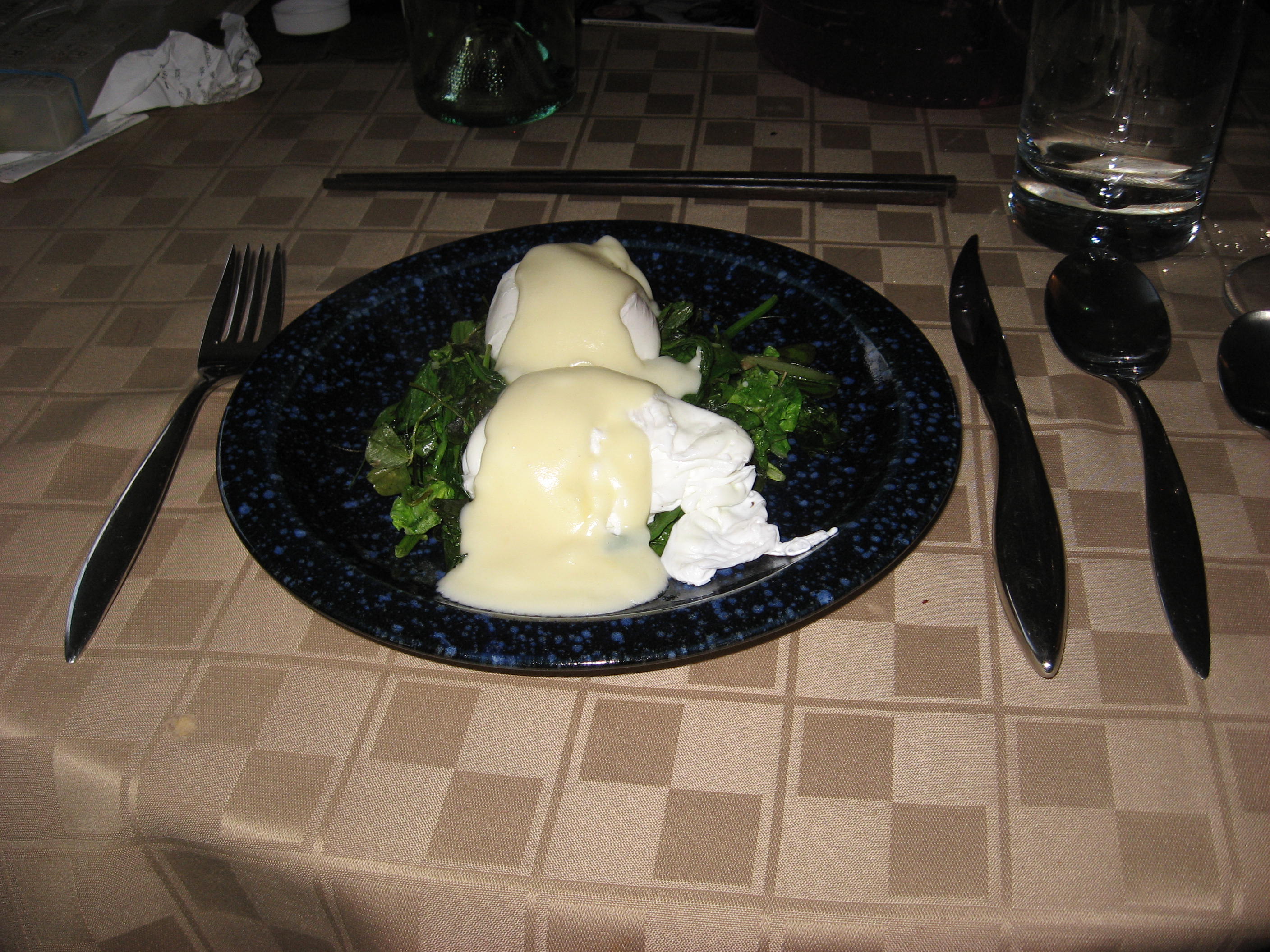
trosly pigs 007This is one of my favorite recipes. In the part of Germany I spent my childhood, this was the dish that was traditionally served on Green Thursday, the Thursday of Holy Week. It was called “Eier auf die Wiese” which means “Eggs on the Lawn.” As you can see, the bed of greens looks like a lawn.

In my mind, because the German word for egg—“Ei”—sounds like the English word “Eye,” and because a cooked egg looks like an eye, I will always think of them as “Eyes on the Lawn.” I also love the combination of cheese and spinach. Another name for this dish is “Eggs Florentine with Mornay Sauce.”

Ingredients:

Sauce:

  • 4 Tbsp Butter
  • 1 Tbsp finely diced Onion
  • 4 tsp Flour
  • 1 dash Salt
  • 1 cup Milk
  • 1 Tbsp grated Gruyère Cheese
  • 1 Tbsp grated Parmesan Cheese
  • Mess of Greens (Spinach is preferable, but you can also use others; traditionally, the German greens for this dish can also include the first wild greens of spring, such as dandelions, Sauer Ampfer and even Stinging Nettles. I started with fresh spinach and added some arugula, and some fresh clover and wild onion tops from the back yard)
  • 4 eggs


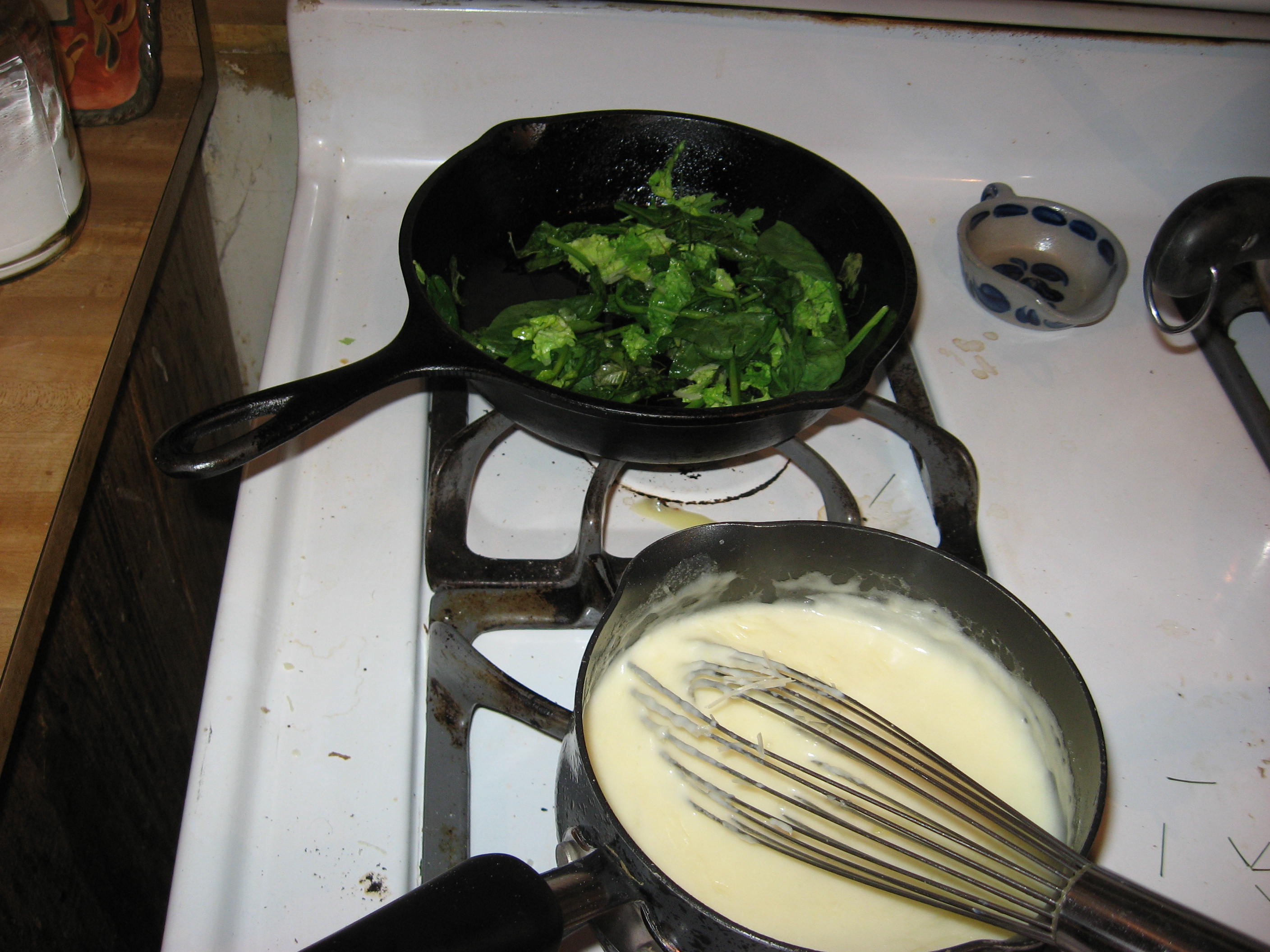
Step 1, a roux: Melt the butter in a saucepan, add the onion and soften a bit, then whisk in the flour, stirring and letting cook a few minutes until it thickens trosly pigs 003and starts to bubble, but not so long that it browns.

Step 2, dairy it up: Add the milk, and stir over a medium heat until smooth. Put in a bit of salt, and pepper if you like. Add the cheese.

Step 3, prepping the greens: In another pan, sauté the greens in a little bit of Olive Oil or Butter.

Step 4, egging it on: Poach 4 eggs. To do this, you can either poach 4 eggs in a pot of boiling water with a touch of white vinegar, and then set upon the greens, or break the eggs whole into the greens and cover until they have poached.

trosly pigs 005Step 5, prep and serve: garnish to plate and add a bit of the cheese sauce.

This is a simple dish, as is fitting for the holiday. Enjoy it with family or friends, perhaps with a bit of toast and a glass of sweet white wine.

Then go wash a strangers feet. What have you got to lose?

How do you teach Poetry?

I love poetry, but I don’t think I’ve ever had a class with a good poetry teacher. An infrmal survey around the store found this to be common, meaning that the only person who had not had a bad poetry teacher had never had a class about poetry.

Have any of you had good poetry teachers? How did they do it?
Do any of you teach poetry? How?

Why we need Poetry and Cheese

Cheese & Poetry 1

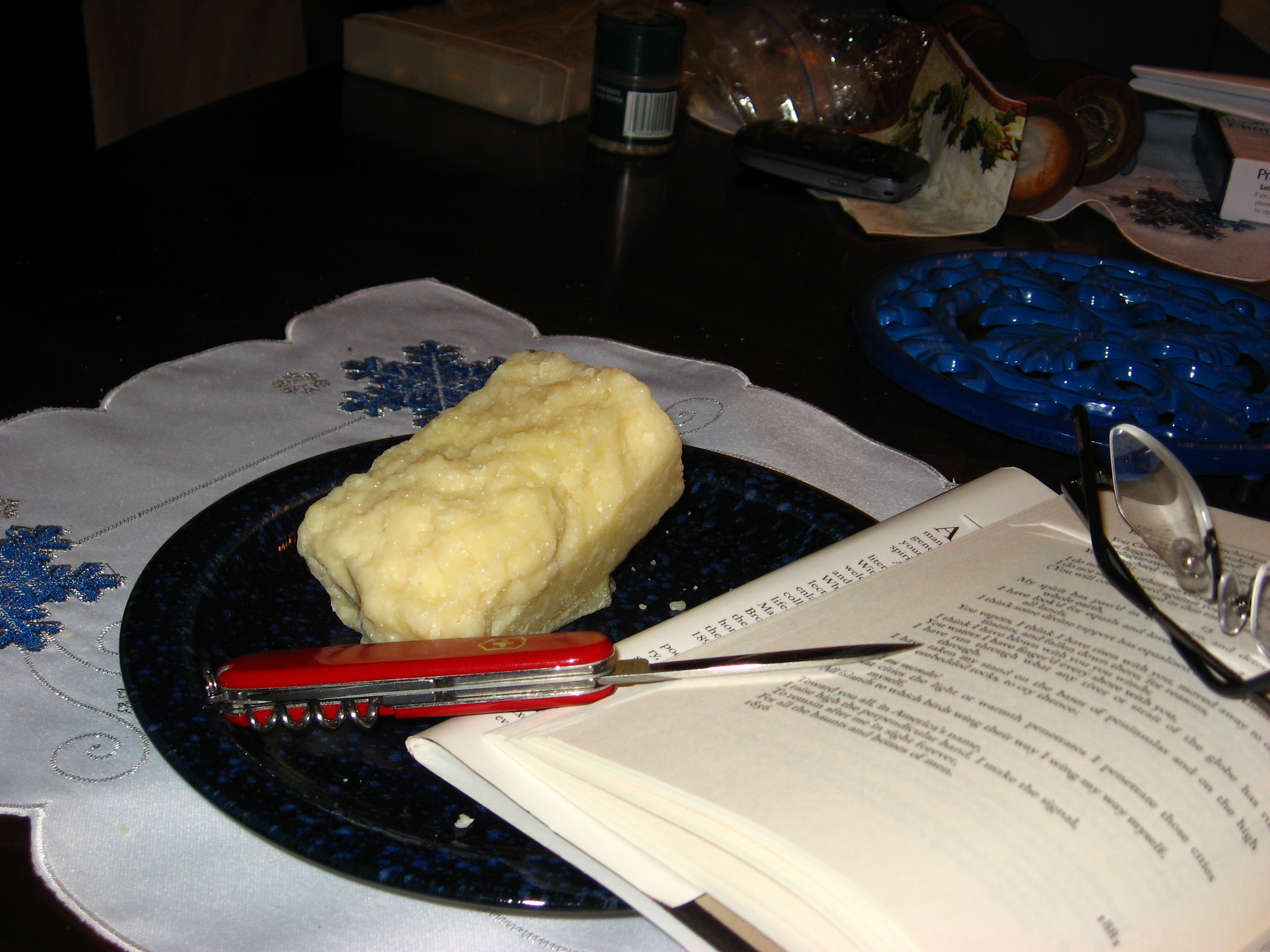
The last time I taught Plato, my students picked up on a passage I had never really paid any attention to before. In the third book of the Republic, Socrates and his listeners are discussing a hypothetical community (a Greek polis, or a republic, or a metaphor for the soul). Socrates is building this hypothesis from the ground up, and trying to keep it simple. Glaucon, with whom he is arguing, objects: “No luxuries?” Socrates responds “I forgot; they’ll have salt and oil and cheese and figs, country herbs and acorns to roast by the fire.” Glaucon objects passionately, arguing that they will need real luxury goods, like imported sauces, fine furniture and concubines.
My students were kind of fascinated by the idea of there being an argument about what members of a community need to spice up their meals. I was fascinated by the idea that this argument came at an earlier point in a book that ends with Socrates exiling the poets because they couldn’t be trusted to tell the truth. Even Socrates, however, recognizes that we can’t just live on wheat and barley cakes; we need salt and olive oil, herbs and figs, and cheese.

There is nutrition, the need to just get something eaten in order to keep going, but there is also food that delights and amazes and makes everything better, food that is an experience in itself, food that makes you just want to stop and be in that moment and find joy in what you have just encountered.
For me, that is often cheese.

Cheese.
It does something that is simply remarkable. It is all produced in a very similar way—cow, goat or some other kind of milk—but it varies from country to country, region to region, and each is remarkable and wonderful in its own way.
The sharpness and character of a Sharp Cheddar, or the similar but different flavor of Red Leicester, the creaminess but surprising oddness of a Roquefort, the mellow smoothness but complex nuttiness of a firm Emmentaler, the rich butter taste of a Gouda or a Havarti, the smooth roundness of fresh Mozzarella as it complements the freshly sliced tomato, the sharp leaves of basil and the rich olive oil.

Each experience is more than just something to eat; it is something remarkable. It is joy condensed into a physical experience.
This experience might be a different food for you, but for me, it is cheese.
This experience is also of a form of beauty.

Beauty.
I am not sure I can define it, but I find it constantly, and it is one of my great joys, one of the things that keeps me going. As I usually do when I can’t quite explain something, let me tell you a story.

A few years ago, a dear sweet man whom I admired and loved passed away. No, this isn’t that kind of a story; Earl had lived a very long, very full life,  was surrounded by a huge loving family, was well thought of by most who knew him, was at peace with his world and his God, and so his passing on was not too tragic. All death is a sadness for those left behind, but he had not left a legacy of ghosts and wounds, but of love and love, and of music, so we celebrated his funeral with mixed sadness and joy.
At the funeral, one of his sons played the violin in tribute to his father, accompanied by his wife. They are both professional musicians, and incredibly talented, but what they produced was remarkable.

They played Ralph Vaughan Williams’ The Lark Ascending.

For just one moment, time stood still.
That one moment I sat in awe.
It was too wonderful for words, a sensation too beautiful for thoughts.
The sounds around me were joy in the middle of sadness condensed into a physical experience.

I do not know much about larks. I do not know anything about souls or heaven.
But at that moment, I understood Earl’s soul rising to heaven,
like a lark ascending.

We live in a world of pain, but even more, a world of bleak grayness.
We need beauty.
We crave and we create beauty great and small, huge joys and little ones; we need beauty, we need poetry and we need cheese.

Poetry.
We need to hear of the eternal voyage from Homer:

“Sing to me of the man, Muse,
the man of twists and turns,
driven time and again off course,
once he had plundered the hallowed heights of Troy.
Many cities of men he saw and learned their minds,
many pains he suffered, heartsick on the open sea,
fighting to save his life and bring his comrades home.
But he could not save them from disaster, hard as he strove –
the recklessness of their own ways destroyed them all,
the blind fools, they devoured the cattle of the Sun
and the Sun god blotted out the day of their return. . . .”

We need the call to human adventure and exploration from Whitman:

Afoot and light-hearted I take to the open road,
Healthy, free, the world before me,
The long brown path before me leading wherever I choose.

Henceforth I ask not good-fortune, I myself am good-fortune,
Henceforth I whimper no more, postpone no more, need nothing,
Done with indoor complaints, libraries, querulous criticisms,
Strong and content I travel the open road.

The earth, that is sufficient,
I do not want the constellations any nearer,

I know they are very well where they are,
I know they suffice for those who belong to them.

(Still here I carry my old delicious burdens,
I carry them, men and women, I carry them with me wherever I go,
I swear it is impossible for me to get rid of them,
I am fill’d with them, and I will fill them in return.)”

The disjointed sensuousness of e.e. cummins:

somewhere i have never travelled,
gladly beyond any experience,
your eyes have their silence: in your most frail gesture are things which enclose me,
or which i cannot touch because they are too near

your slightest look easily will unclose me
though i have closed myself as fingers,
you open always petal by petal myself as Spring opens
(touching skilfully,mysteriously)her first rose

or if your wish be to close me, i and
my life will shut very beautifully, suddenly,
as when the heart of this flower imagines
the snow carefully everywhere descending;

nothing which we are to perceive in this world equals
the power of your intense fragility: whose texture
compels me with the color of its countries,
rendering death and forever with each breathing

(i do not know what it is about you that closes
and opens; only something in me understands
the voice of your eyes is deeper than all roses)
nobody, not even the rain, has such small hands

Echoing Schiller, I would say that this is joy condensed into an experience with words; even the joy of a poem that makes us ache and weep allows us to walk drunk with fire.

A good bit of cheese, the first bite of summer’s home grown tomato, a poem, a piece of music–each time we encounter them, each of them transport us like a first kiss. They are like the first spring sunshine upon whatever makes up the human psyche. They nourish us. Joy nourishes us to allow us to be who we should be. Beauty nourishes us to make us who we should be, and even what we might be. It helps us to find that which goes beyond good; it suggests better.
ending321

Welsh Rarebit

trosly pigs 024This is a very basic, but wonderful, cheddar cheese sauce which I first encountered in Illinois, where it is the main ingredient in a Horseshoe Sandwich. The sauce itself is fairly simple, but incredible, and can be used in a variety of ways.

(Note: I realize that for many of you, next week will include that important yearly holiday, the celebration of the beginning of the newest Dr. Who season, so I considered posting my Tardis Cookie recipe. However, Cheese is a theme this week. I will, however, post them eventually, I promise.)

trosly pigs 023

By the way, this is what the bottom drawer of my fridge looks like:


Ingredients:

  • ½ 12 oz Bottle of Beer
  • 1 lb. grated Sharp Cheddar Cheese (we used half Kerrygold Dubliner & half Cabot’s Seriously Sharp)
  • Pinch (scant 1/8 tsp?) mustard powder
  • Dash Worchester Sauce
  • Dash Onion Powder
  • Dash Paprika
  • ¼ tsp Corn Starch


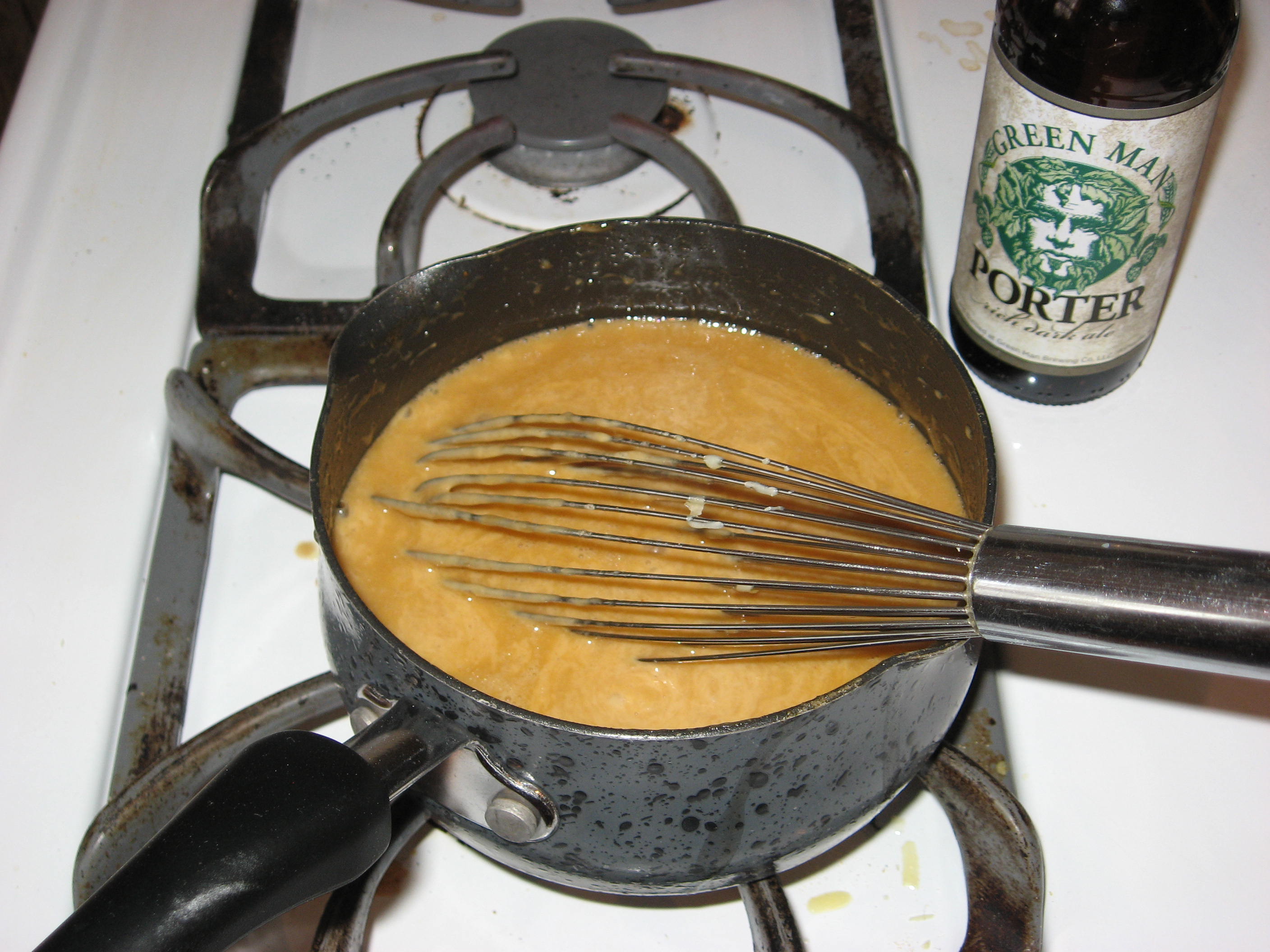
Step 1, heat it up: In a small saucepan, whisk the corn starch into a half a bottle of beer, and then bring the mixture to a boil. Be careful, because it will foam.
I’ve made this with several beers, and it is best if it is something with strong flavor, like a porter, but without the bitter overtones of a stout; experiment and find something you like. Most recently, I used Killian’s Red, but last Sunday, I went down to the Green Man Brewery in Asheville, and they are now bottling their porter, with is very smooth, and which I can recommend.

Step 2, a little spice: Stir in the mustard, the Worchester sauce, the onion powder, and the paprika.

Step 3, the cheese: A handful at a time, add in and dissolve the cheddar cheese. The end result should be thick and bubbly.

Step 4, serve: There are a variety of uses for rarebit.

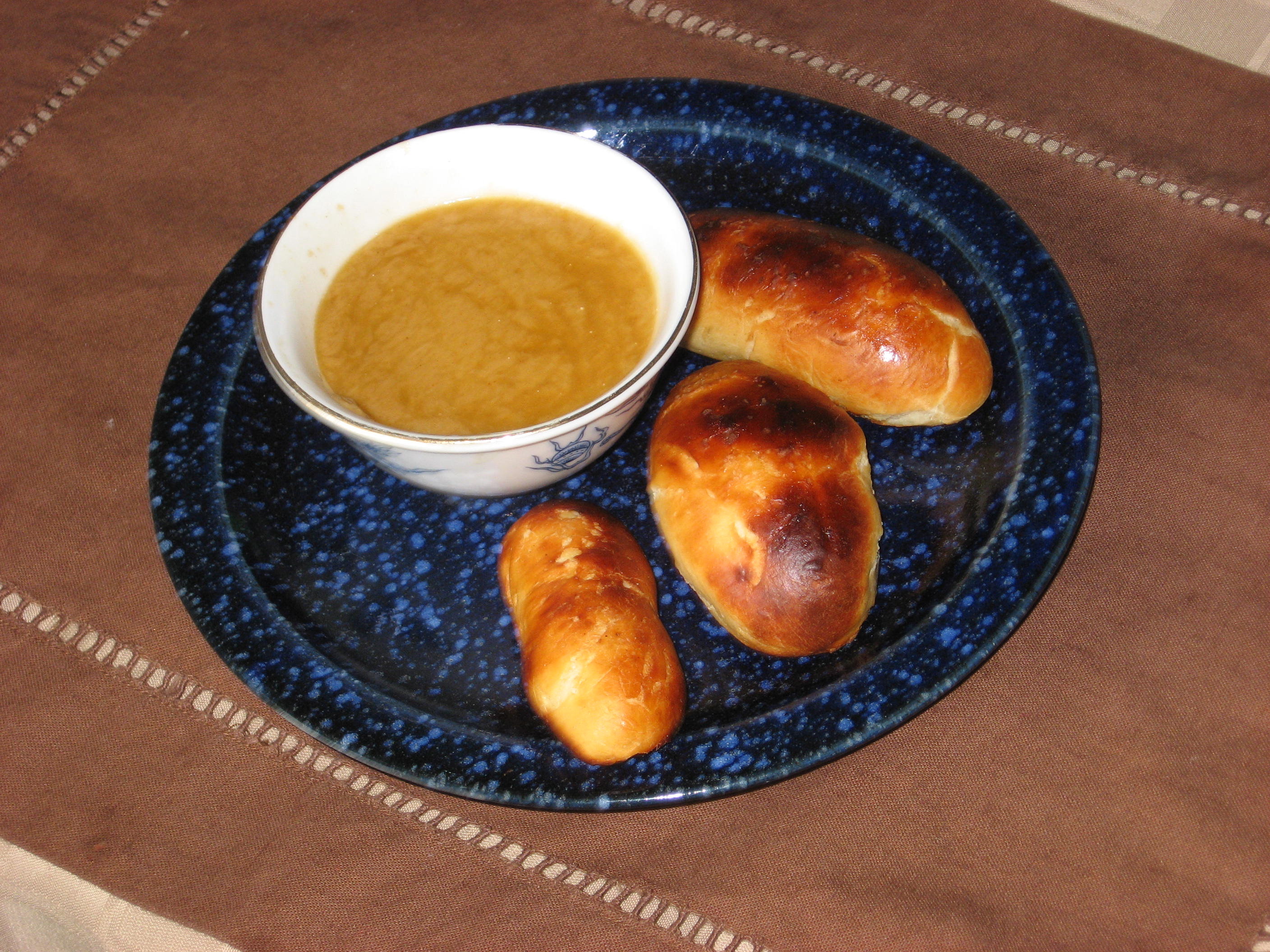
trosly pigs 025When she was in for spring brake, my amazing daughter & I made it to dip home-made soft pretzels in.

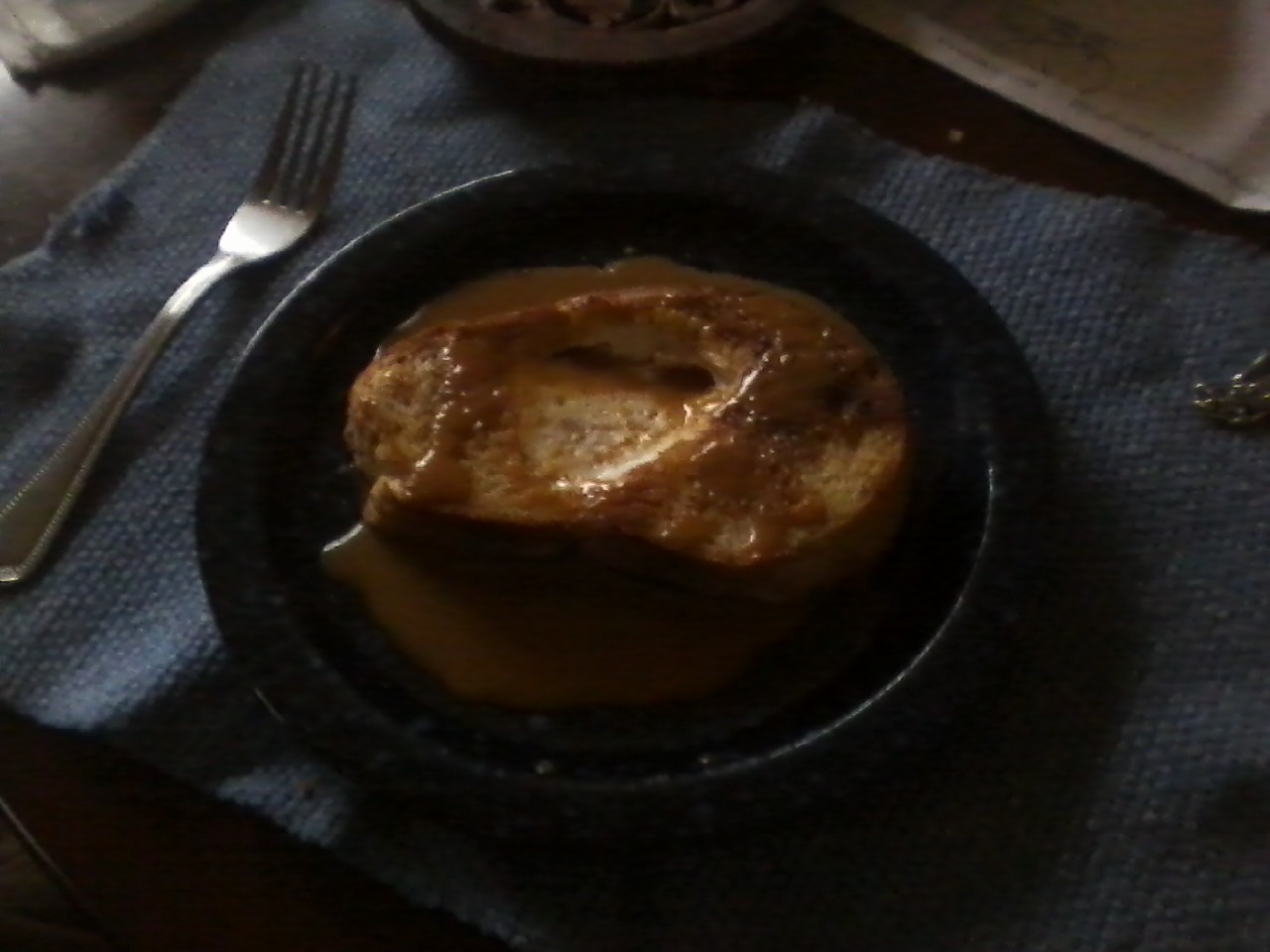
Traditionally, it is served over two pieces of toast which are Hidden Egg & Welch Rarebitthen broiled slightly as a light supper (in place of rabbit). As a variation on this, I cut a hole in a thick piece of bread, put it in a skillet with a little butter, broke an egg in the whole, fried it over easy, and then served it with the rarebit.

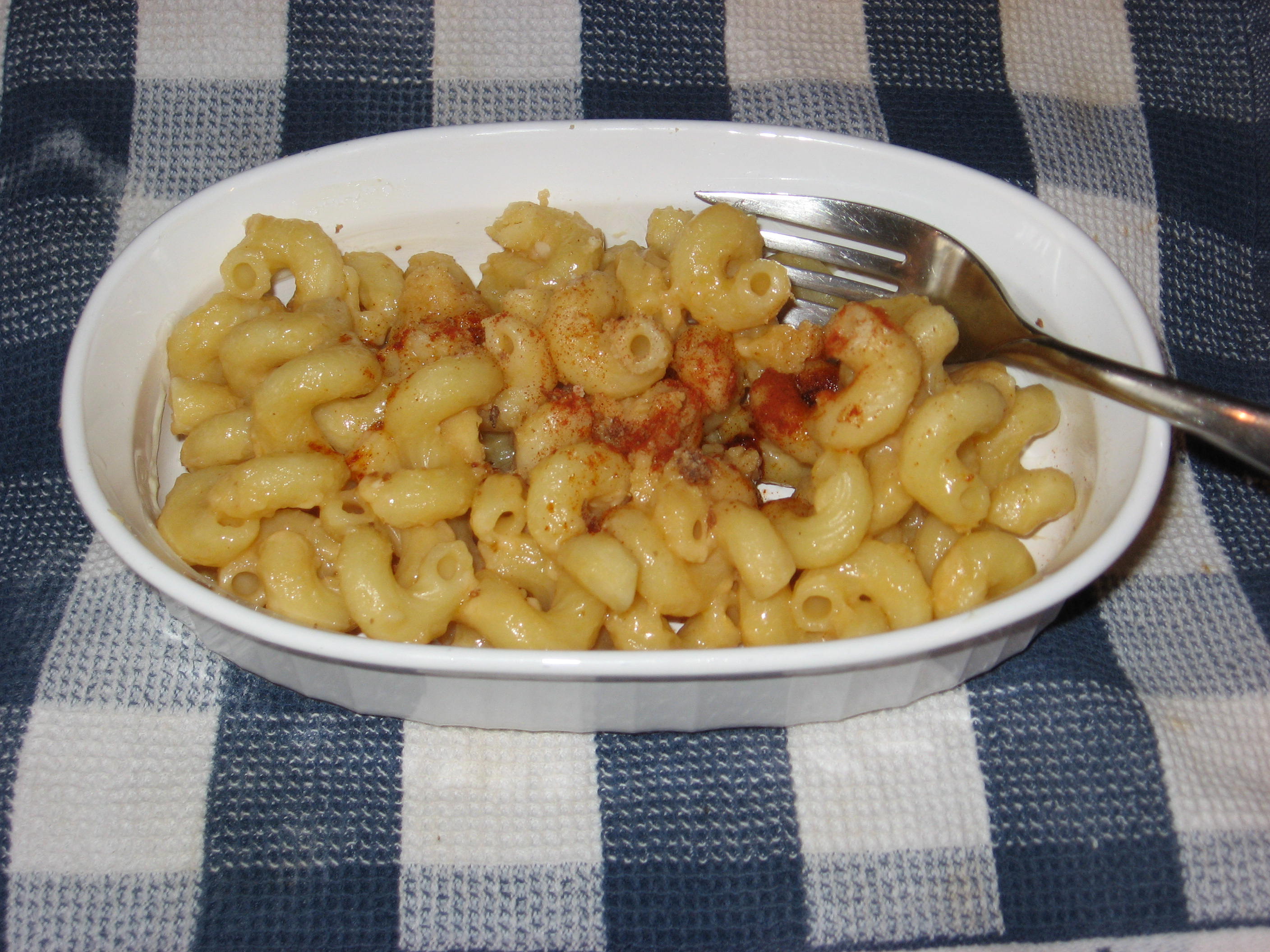
trosly pigs 019I also use it as my sauce for home-made macaroni & cheese, since I don’t particularly care for most home-made macaroni & cheese.

As I mentioned, it is an ingredient in a Springfield Illinois style Horseshoe Sandwich. More than anything else, though, the Rarebit Sauce is amazing with French fries.