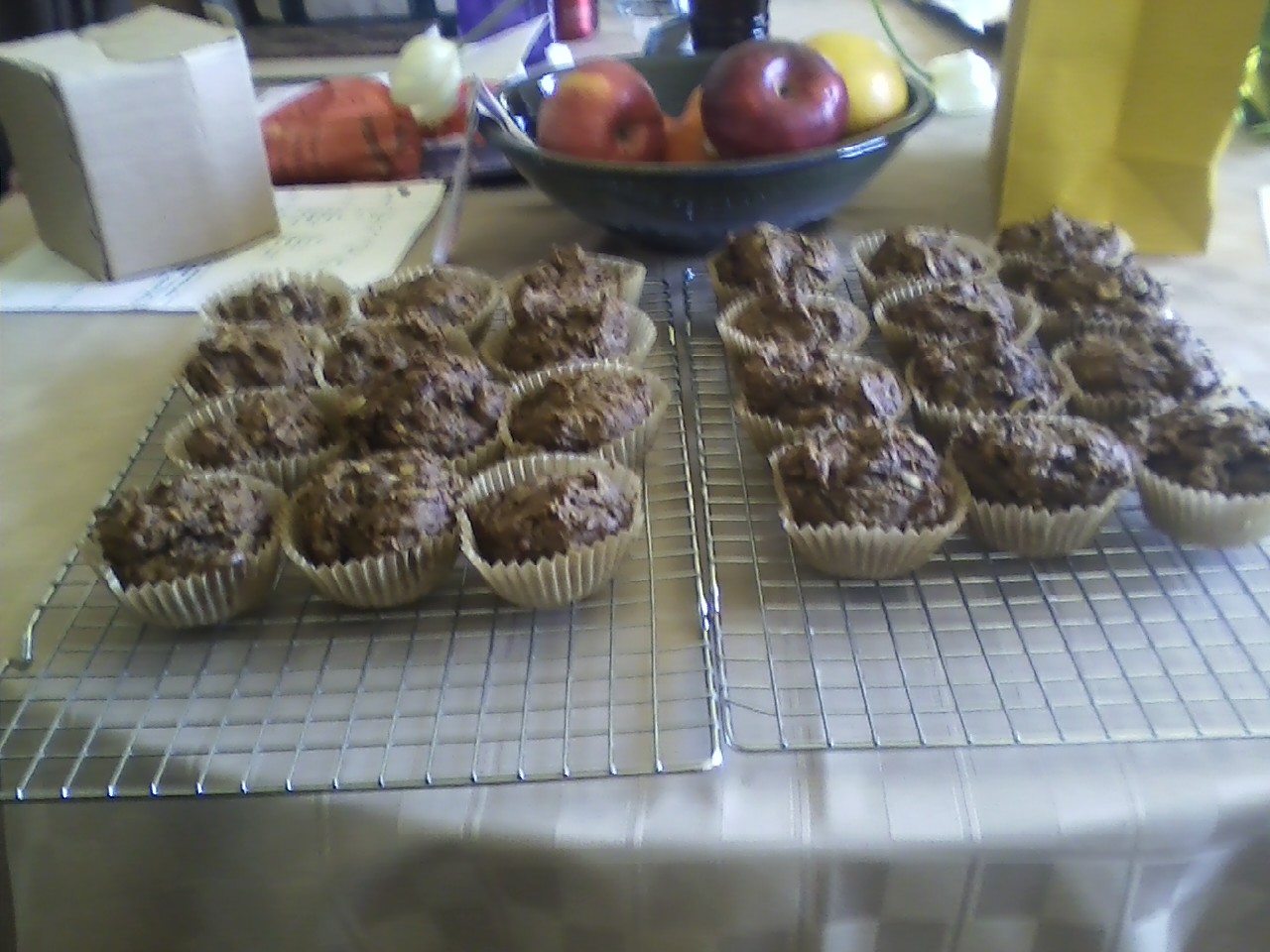
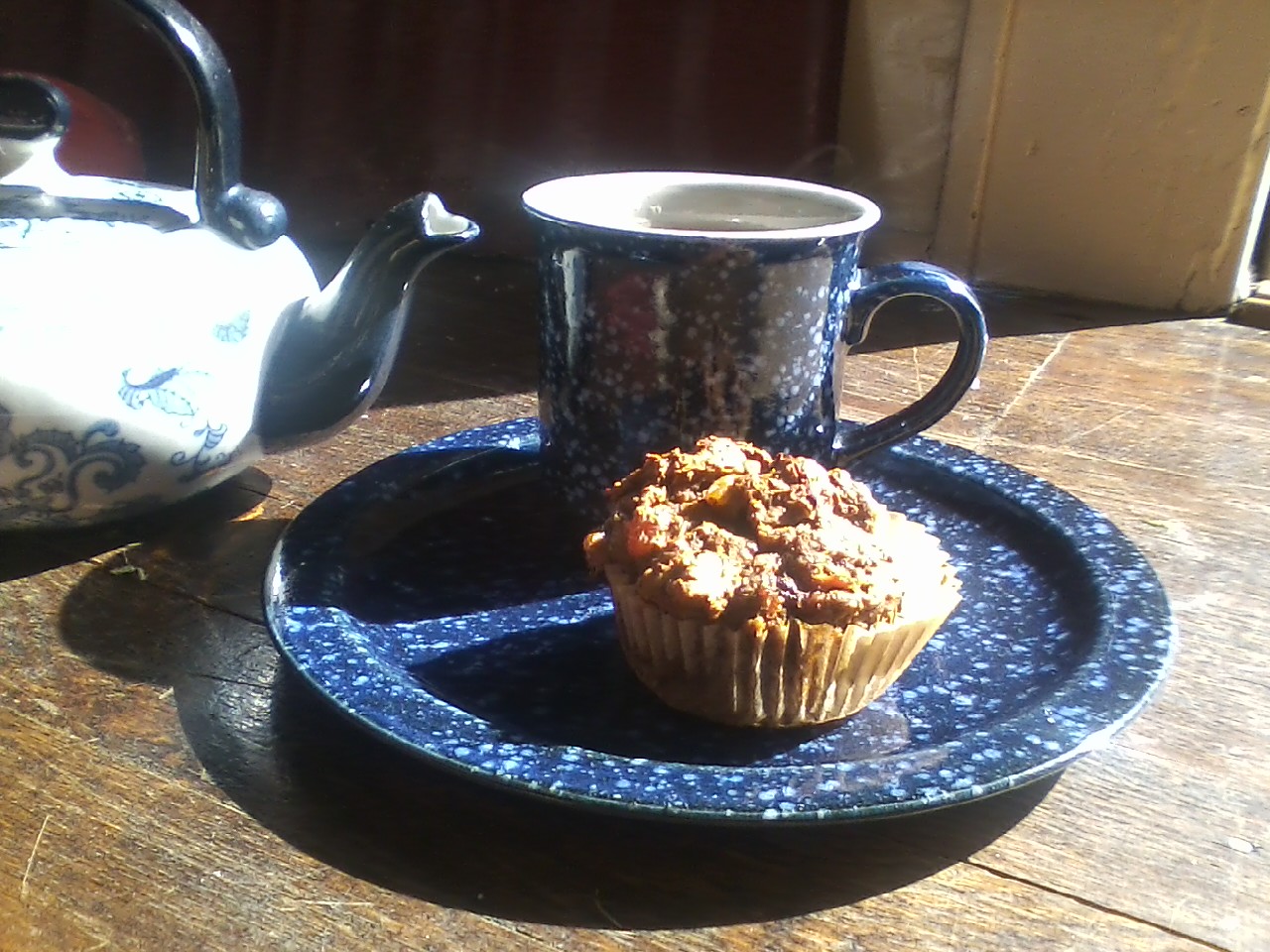
Pumpkin Carrot Beet Muffins

PCB muffins 3Like many recipes, this one has a bunch of dry ingredients, and a bunch of wet ingredients which eventually come together.


Ingredients:

  • 2 cups flour (Whole wheat, white, both, as you wish)
  • ¾ cup of sugar
  • 2 tsp baking soda
  • 2 tsp. cinnamon
  • ½ tsp mace (this gives it a little bite, but can be left out or replaced with ginger)
  • ½ tsp salt
  • ½ cup brown sugar (it will clog the sifter).
  • ½ pound shredded carrots (or carrot  & beets mixed) I have a scale, but you can also sort of figure out half of a 1 lb. bag of carrots.
  • ½ cup raisins (Golden raisins are better; sometimes, if the raising are really dry, I soak them in rum or coffee or warm water)
  • ½ cup walnuts
  • (optional, ½ cup pumpkin seeds)
  • 2 cup pumpkin
  • 3 eggs
  • ½ cup oil (it might work without this, I liked making it with coconut oil.)
  • 2 tsp. vanilla

Step 1, Prepare Ye the way: Preheat the oven to 350°, shred or grate the carrots and/or beets, either grease the muffin tins or put in the cupcake liners (I usually spray a little canola oil in the bottom of these to make things come out easier). I get 2 dozen medium sized muffins out of this mix.

Step 2, sifting the dry ingredients: In one bowl crumble up the brown sugar, then sift (mix if you don’t have a sifter) in the flour, white sugar, baking soda, cinnamon, mace, and salt. Mix thoroughly.

Step 3, mixing the wet ingredients: In another bowl, mix the shredded root vegetables, raisins, walnuts, pumpkin, eggs, oil and vanilla.

 Step 4, combining the big mess: Add the dry ingredients to the wet ones and mix well. You want to make sure the individual bits of carrot & beet are each coated to keep them from getting too clumpy. The consistency should be much firmer than batter, but a little more liquid than cookie dough. I used pumpkin from a vegetable my daughter had slaughtered, but canned pumpkin is a but less wet, so you might have to add a little liquid, like 1/4 cup of orange juice.

Step 5, baking: Fill two dozen or so muffin tins. Bake at 350 degrees for 30 minutes. I never wrote the time down, but it is at least 20 minutes and probably less than 35. See how they look. Stick a toothpick in one and see if it comes out battery.

PCB muffins 1Enjoy! These are perfect breakfast, for leaving at the back door of good friends, for sneaking across the counter to gorgeous barristas, for setting on the desks of helpful librarians, for sending to Brooklyn with couch-surfing college girls; you name it.

The silly, silly meaningfulness

 Valentines Baloons 2That silly, silly meaningfulness; the language game of love

Shake ShackWhen night is almost gone, but before the next dawn has come, sometimes, you can see a brilliant star, the brightest star, in the eastern sky; it is the morning star.

What do we talk about when we talk about the morning star? Believe it or not, this kind of question was the sort of thing that dominated discussions within earlier 20th Century Linguistic Philosophy. You see, the morning star isn’t really a star, nor does it particularly belong to the morning. The referent—the object that the phrase refers to—is the planet Venus. Strangely enough, Venus is also occasionally the evening star, depending upon when you see it. Obviously, although they both refer to the planet Venus, the phrases “morning star” and “evening star” don’t mean the same thing at all. Regardless, however, of this quirk of words, both phrases mean something, and we understand both. Language doesn’t always work in clear equivalence or rules.

What do we talk about when we talk about love?GCC3

Nothing. If we analyze the things we say to people we love, most of the things we say are meaningless in themselves, and many of the things we say are downright silly. From Shakespeare’s Orlando calling upon the Thrice-Crowned Queen of Heaven to bear witness to his love to MacBratney’s Nut Brown Hare loving his little bunny to the moon and back, the words don’t really “refer” to anything in a meaningful way. From “My love is like a red, red, rose…” to “Love you more!” they are games we play. What the words do is connect the participants in a specific conversation as players in a game—the only important game—in a distinct, intense and very personal way.

What do we talk about when we talk about love?

Like playing a game of “Keep It Up” with a red balloon, the point of the language game of love is to keep the ball in the air, the game in motion, the participants connected, the love alive, and the beloved loved.

What do we talk about when we talk about love?GCC1

Of course, we can give our loved ones bread and soup, or bake a Valentine’s Day Ginger and Chocolate Chip Cake for our co-workers, but there are an infinite variety of ways to play this game. The language game of love can be an individualized school lunch packed with care, the Marx Brothers routines my dad and my uncles did for each other and for my grandma after my grandpa’s funeral, a game of catch with a child or dog, and, of course, the mystically silly dance of sex.

What do we talk about when we talk about love?

Of course there can be the cliché red roses and chocolates of Valentine’s Day, or of locking a padlock with you and your lover’s heartlocknames on it on a public place, but there is so much more. The language game of love is the gestures and questions of still being curious about the stranger you have lived with 20 years, standing up to meet a lover at the end of an exhausting day, or washing the dishes, pots, and pans for somebody who has cooked your supper. It is shining your shoes, buying a new tie or putting on lipstick to win the heart of someone you see every day.

These things have no logical content and they are not sentences that can be diagrammed or translated into the IFFs, tildes & horseshoes of Logical Language L.
Yet they are the most important things we ever say, ever have said, or ever will say.

So, speak of love. Tell someone something silly, silly, and meaningful today.

Gingerbread Chocolate Chip Cake

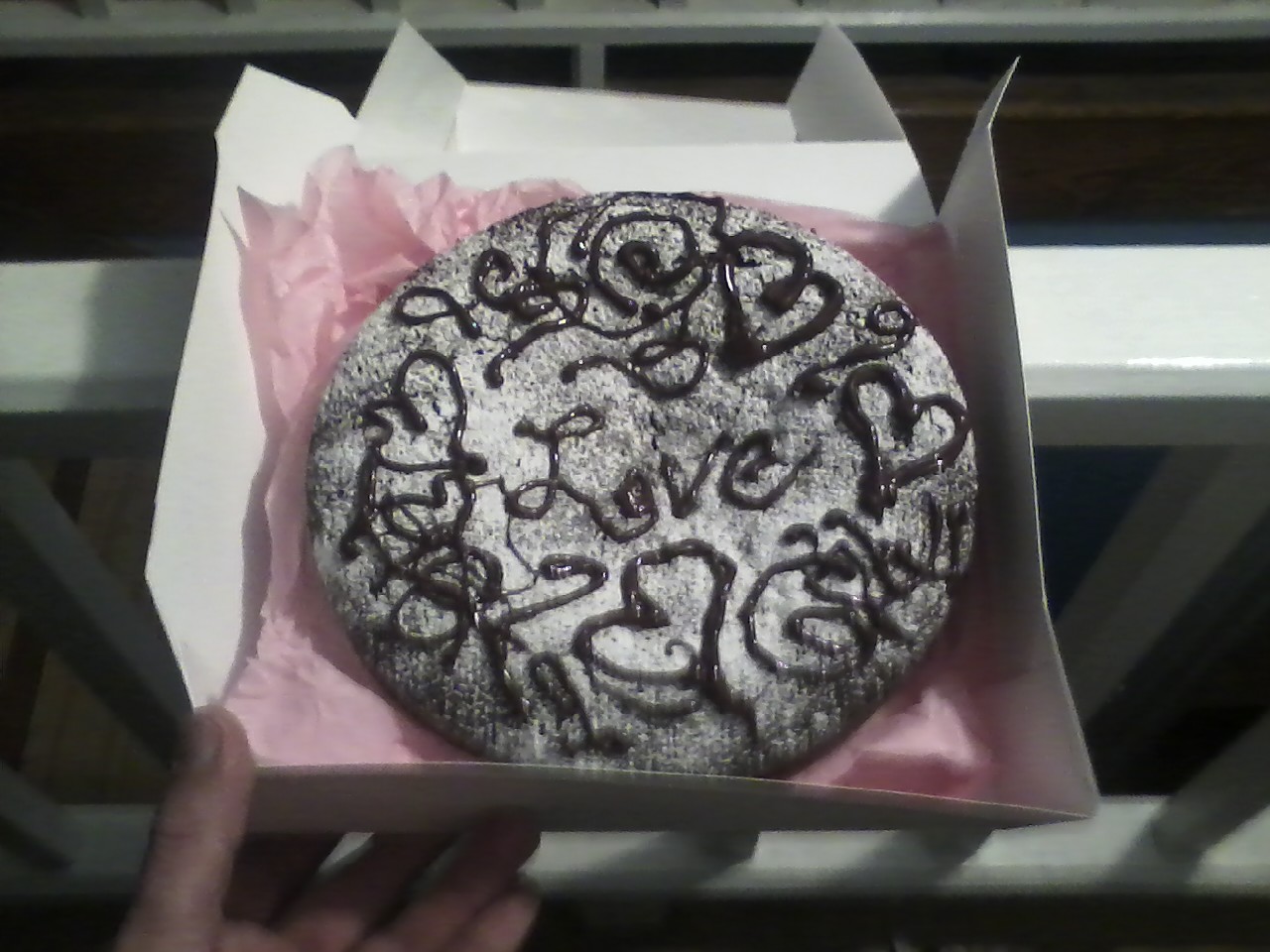
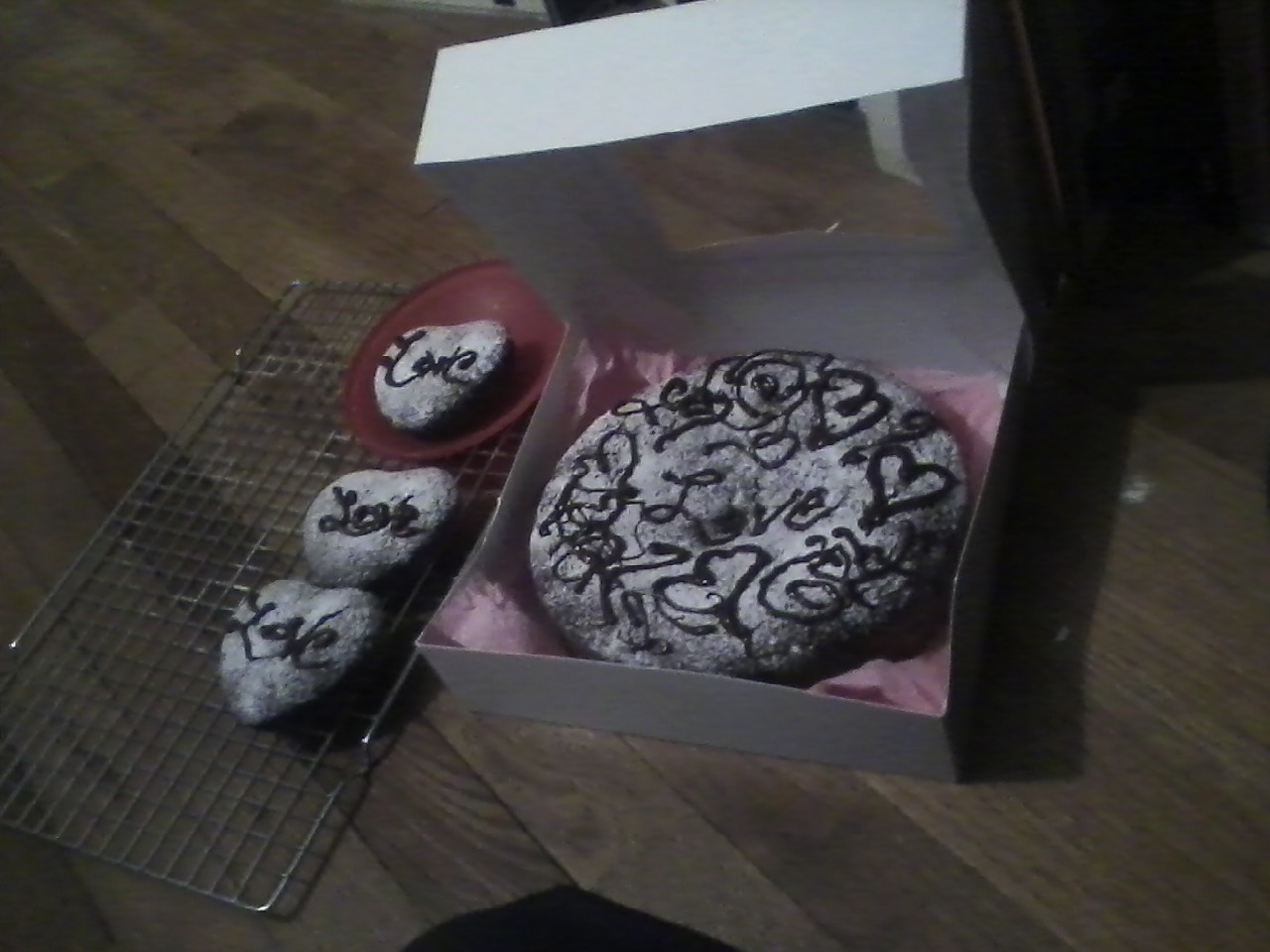
Gingerbread Chocolate Chip Cake for Valentine’s Day

IGCC1ngredients:

 2 1/2 cups all-purpose flour
1  tsp.  baking powder
1/2 tsp. salt
2 Tbs ground ginger
1 tsp.  ground cinnamon
1/4 tsp. ground pepper. cloves or red pepper (depending on how much adventure you like)
1/4 tsp. nutmeg
1 cup oatmeal stout or Guinness Stout
1 cup dark molasses (not blackstrap)
1/2 tsp. baking soda
1 cup packed dark brown sugar
1 cup granulated sugar
1 Tbsp freshly grated ginger
3 large eggs
1/2 cup vegetable oil
1/2 cup dark chocolate chips
Powdered  sugar for dusting

Step 1, Prepare ye the way: Preheat the oven to 350, grease & flour the pan or pans; I think this makes one Bundt cake, two smaller cakes and two or three loaves.  Also assemble all the ingredients on the counter.

Step 2, sifting the dry ingredients: In a large bowl, sift the flour, baking powder, salt, dry ginger, cinnamon, and pepper or nutmeg. Set aside.

Step 3, mixing the wet ingredients: in a medium saucepan (leave room; there will be foam), heat the stout. Take it off the burner, and carefully (!) add the baking soda (this is like the elementary school volcano experiment, but also like my soft pretzel/laugen recipe), whisking it smooth. After the foaming subsides, whisk in and dissolve the brown and white sugars, then, as it cools,  the ginger, the eggs and the oil.

Step 4, combining:  Add the wet ingredients to the dry ingredients, maybe about a third at a time, mixing thoroughly. You don’t want pockets of dry, floury ingredients.

Step 5, putting it in the pan/pans: Add half the mixture to the prepared pan/pans, sprinkle this with half of the chocolate chips, then pour in the rest of the mixture and sprinkle with (you guessed this, didn’t you) the rest of the chips. They should sink into the batter.

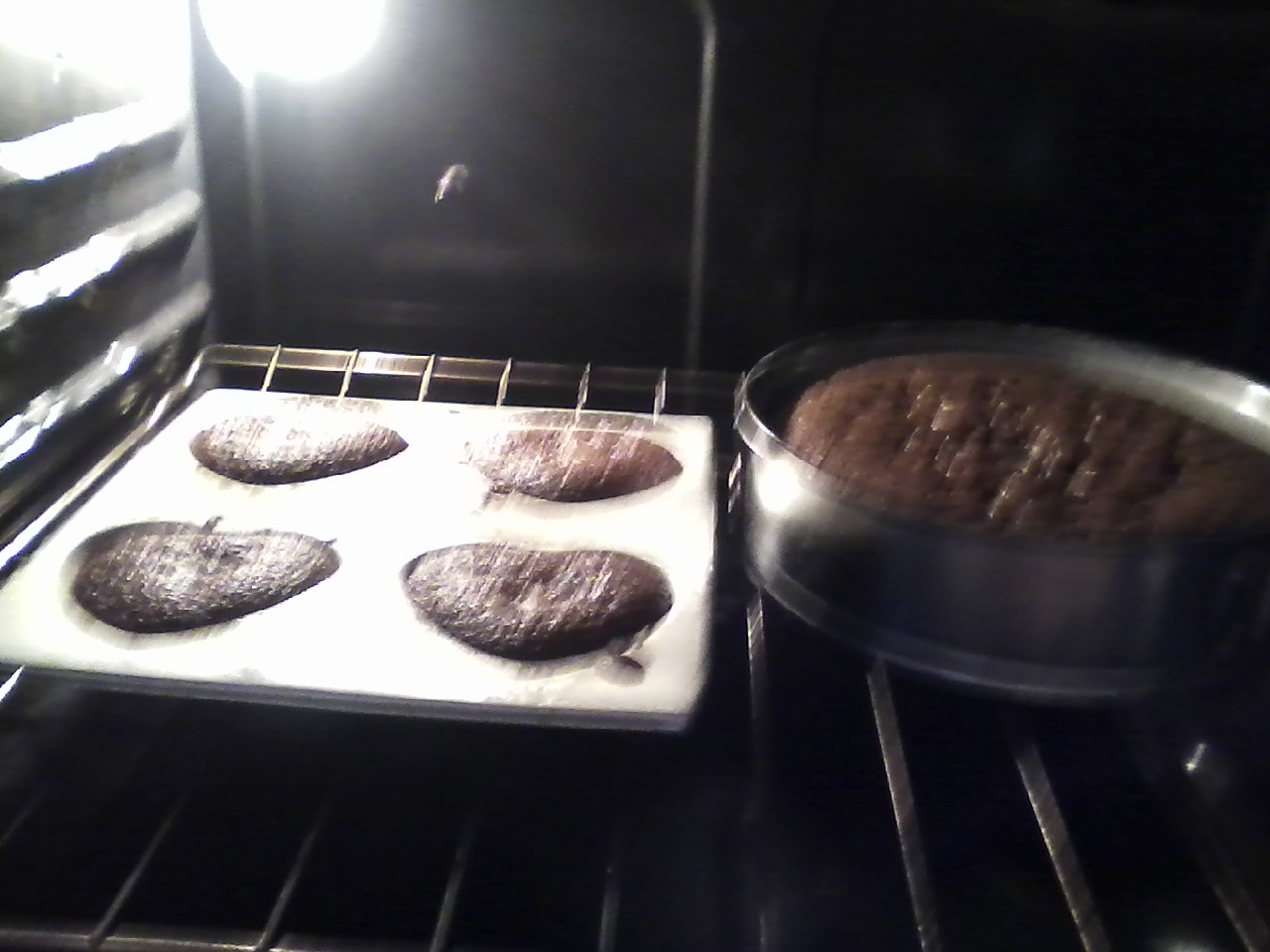
Gingerbread Chocolate Chip Cakes in OvenStep 6, pop it in the oven for baby & me: bake the pans at 350 for 25 to 35 minutes, or until you can stick a toothpick in it and pull it out without it being covered with batter. Take it out, let it sit for a minute or so, then take it from the pan onto a wire rack to cool all the way.GCC5

Step 7, decorating and serving: Once it is cooled, you can dust the whole thing with powdered sugar, or come up with some sort of delicious icing. I plan to powder it, then decorate it with little bits of chocolate.

A word about irony.

Hipsters in Washington HeightsHey.
I’m not a hipster, although my life has had some “Bobo” elements.
I started wearing fedoras because I wanted to be cool like Bogart. At the time, everybody was trying to look like the BeeGees
(ask your mom).
I grew the facial hair to look scruffy like Springsteen and Dylan.
I started wearing boots because I wanted to be cool like Sid Vicious.
(Do you even know who Sid Vicious was?)
I found I liked all these things, and I added vests because I liked them. They also give me a place to keep my watch.Dr Bear in Vest
I’ve never read On the Road; although I think we used to pretend we had.
A long time ago, I used to carry around copies of Pirsig’s Zen and the Art of Motorcycle Maintenance and of Nietzsche’s Thus Spake Zarathustra, but some of that was posing, too. I do think that reading Turgenev might have changed my life, but I am certain that it changed my wardrobe.
I like locally owned microbrews because they are really good beer.
I buy cheap beer because I cannot afford locally owned microbrews.
I love irony–I had forgotten my youthful fondness for irony & symbols until I recently found a picture of me in my 20s wearing a Mickey Mouse Tshirt with safety pins in MIckey’s ears. I also….

wode toad(Wode Toad tells me that I am digressing,
and need to get back on track…)

Because I value wit, I also value irony. It is a useful & fun form of expression. It also seems an antidote in a world that is filled with people who are way too serious.
But look, irony also involves a failure to commit; something said, or even just hinted at, ironically can be disowned or dismissed if it gets too close to being called out.

So here’s my advise:
Don’t.
Stop it right now!
Stop trying to be ironic.
Don’t speak ironically, speak honestly and passionately; don’t flirt, love. The original hipsters viewed the quotidian society with irony, but threw themselves into life, into dancing to bebop, into loving the women and men they were with, onto the road.
Tear it up.
“Sound your barbaric Yawp over the roofs of the world!”
Throw yourself into where and what you are; learn to be, and do not be ironically.

Photo courtesy of EGS feet courtesy of the divine meg

Photo courtesy of EGS
feet courtesy of the divine meg

You are being ironic because you are afraid of being silly, but why? If living fully, if experimenting with life makes you look silly, then own it; everybody looks silly the first dance, the first time stepping on a long board, the first step into freezing water at the beach, but they look sillier if they hesitate.
Jump into life, even if it seems silly.

(Besides, I’ve seen your little hats and your mustaches; you already look silly.)
Stop being ironic right now!

No, that’s too harsh: Tshirts, bumper stickers, & memes can be ironical. Jokes among friends can be ironical; comments whispered about other people can be ironical, especially when to do otherwise would be cruel.

Just don’t be ironic to people; always be honest to people.
Especially yourself.

PS: also learn to use the word “ironic” correctly. You are killing me kids.

Peace Lentil Soup

Peace_Lentil_SoupRed Lentil Soup
My daughter Grace acquired this recipe at a potluck after a march to support a Palestinian homeland, so we call it “Peace Lentil Soup;” marching is necessary, because there is so much to be outraged about, but I believe that the basis of peace is eating together. This soup is promising because it is cheap, delicious, and doesn’t involve killing anything. 

Ingredients:

 2 Tbs oil (olive, canola or peanut)
1 onion, chopped (or 1 cup frozen, chopped)
4 garlic cloves, minced
Salt to taste
1/2 tsp ground cumin (more to taste)
1/2 tsp ground coriander (more to taste)
2 tsp curry powder
1 (28-oz) can chopped tomatoes in juice
1 lb red lentils (about 2 cups), washed and picked over
2 qts chicken or vegetable stock (add more liquid if you like a thinner soup)
1/4 tsp ground pepper (more to taste)
Cayenne (optional, to taste)

Step1, Sauté: Heat oil in a large, heavy soup pot over medium heat. Add onion. Cook, stirring, until tender, about 5 minutes.
Add garlic, 1/2 tsp salt, cumin, coriander, curry powder.
Stir together for about a minute until the garlic is fragrant.
Step 2, Stew: Stir in tomatoes with their juice.
Bring to a simmer and cook, stirring often, for 10 minutes, until the tomatoes have cooked down slightly.
Stir in lentils and liquid.
Bring to a boil, reduce heat, cover and simmer 30 minutes.
Step 3, fiddle a little: Add more salt to taste, if desired, and cook 15-30 minutes more until lentils have fallen apart and thickened the soup.
Using the back of your spoon, mash the lentils against the side of the pot to thicken the soup further.
Add the pepper and cayenne to taste.

Step 4, share it with other people around your table.
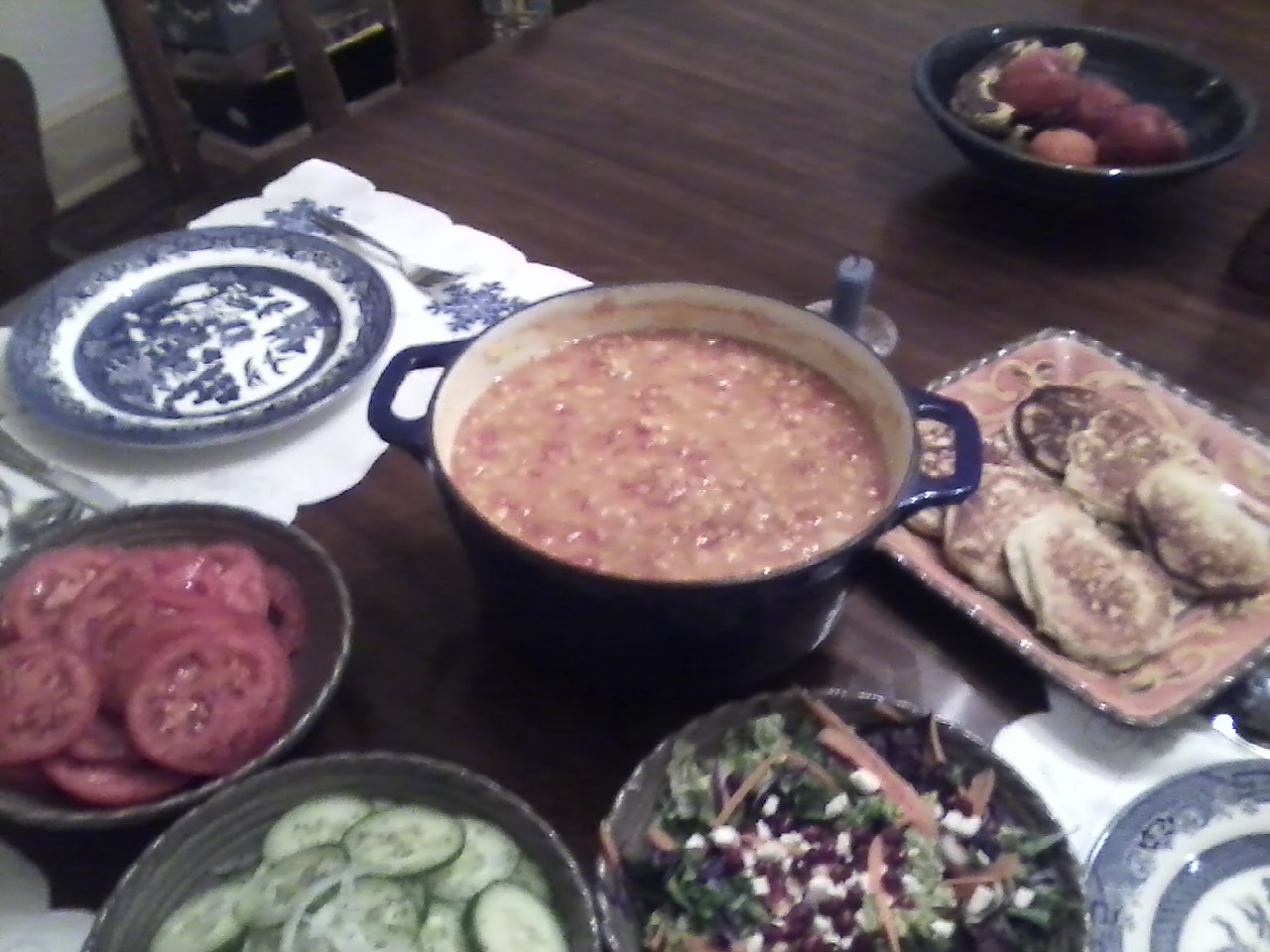
Hey, Hipsters: you gotta eat. Have some of your friends over and have soup. One of the most sincere (that means not ironic) things you can do is eat with people in your own house. It is really good with water or iced tea, but especially gPeace Lentils Left Overood with a sweet white wine, a crisp pub cider, or a complex local IPA. The last time I made this, I served it with salads and corn cakes with some sharp, hard cheeses, and the next 3 hours of  conversation were so lively, so lovely that I forgot that I had made dessert.
As always, there may be leftovers for monks, students, et.al.

Growing up a stranger

Dear beautiful daughter, my dearest Grace,

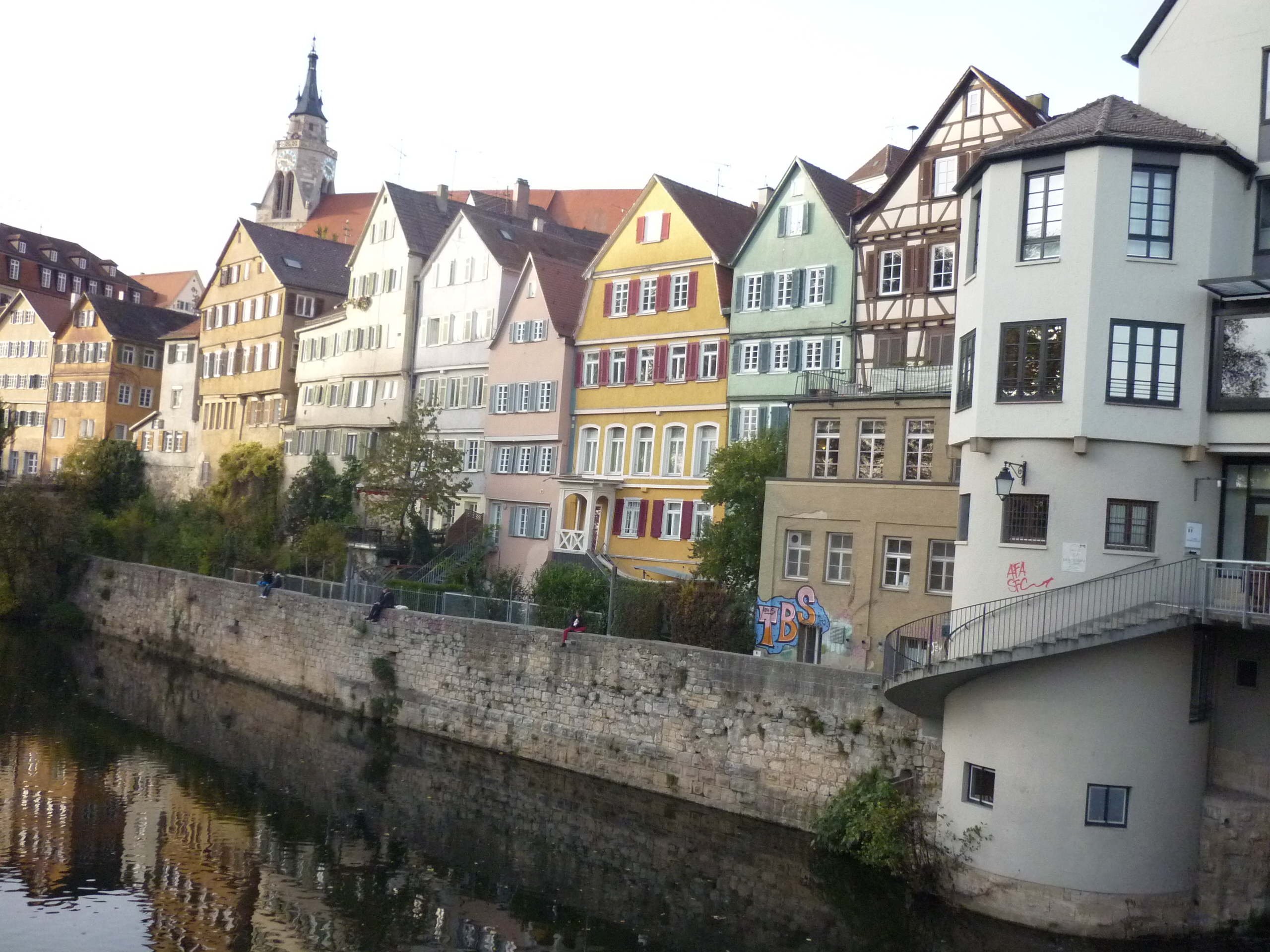
Tubingen RiverfrontOnce upon a time, there was a beautiful city, over a thousand years old, named Tübingen. It lay surrounded by vineyards along the lazy Neckar River. Beyond it on one side was the dark, primeval and hauntingly beautiful Black Forest. Beyond it on the other side loomed the Swabian Alps, the mountains capped with castles and monasteries and further in the distance, brilliant snow.

The old gray cathedral cast cold shadows about it, especially the window of the martyrdom of St George (one of several, apparently; a durable fellow) showing his limbs being threaded through a giant wheel. But the town hall, with the gilded paintings staring down upon the brightly colored umbrellas of the farmers market always seemed warm. At Christmas, the market would fill with crafts and toys, and the smell of gingerbread and candied almonds and fresh Crepes. In the warm summers, the students would guide long boats up and down the river beneath the ancient city walls with poles, and would sing folk songs.

The narrow cobble stone streets had been tread for hundreds of years by famous poets (Holderlin, Hesse), philosophers (Schelling, Hegel), scientists (Kepler, Alzheimer), Theologians (Melanchthon, Moltmann), students, even a few saints, and one wandering boy.

This was my Tübingen, the city I eventually discovered, and which I return to in my memories, and which I am always embarrassed to talk about because it sounds like I made it up. It was never my own city—it had belonged to others before Christ was born—but because I was my own self we could look at each other, and nod, and grin.

As I said, however, it was the city I eventually found, and the city I remember, not the one I arrived in. I arrived feeling very small, my shirt un-tucked, my dark bangs in my eyes, clutching the only two or three things I owned in a pillow case. The most important thing in that pillowcase, the most valuable thing I owned, was the threadbare stuffed giraffe who would often seem like my last and only friend. Leaving Pennsylvania, I would never again completely feel at home.

The next day, I went to school, only knowing 3 words of German: Schwester, Gabel, & Wohnzimmer (Sister, Fork, and Living Room). Although I could pass for a German—and even for a local, a Swabian—within a year, I never would be; I would always be an alien, a stranger, an outsider. At the time, I was under the impression that returning to America would be like returning home, but it wasn’t. I had become a stranger.

I think that is why I love wandering—that is the place where I am supposed to be a stranger; it hurts to feel like a stranger when one should be settled, but it feels natural when one is a wanderer. In addition, I am good at learning how to adapt to a strange place; it doesn’t feel as foreign because I expect every place to feel foreign, but I also expect to find the stories, the wonders and the sensations I found in that magical city on the Neckar River.

It taught me how to survive loneliness and pain, and to rely upon myself; sometimes, that is good, sometimes I suppose it isn’t. I have trouble trusting people, of relying on them. No, that’s too simple. I don’t trust people, and I don’t make the effort to help them be people I will rely on, to let them know what I need, because I am afraid of needing anything.

Talking to Dwayne, one of the owners of The Beckner on Main, the other day, he said that one of the things he learned living as a child first in New York, then in the Caribbean, then in Southern France was to become an accomplished mimic. For most folks, their voice—the words and persona they present to the world—is an unexplained starting place. For a person living in a foreign culture, the voice is a projection of which one is sharply aware and which one always must strive to control or conform. Your own voice is both your own and the force of a foreigner, a stranger’s voice. It becomes part of a projected you between your private self and the alien world.
Many people who move a lot feel this, this strangeness of who they have to keep becoming; in a foreign language, this strangeness is much more pronounced (a truth, as well as a subtle pun).

Although I could pass for a native, I often chose not to; I knew I was not, and chose be be who I was—I would never feel at home in Lederhosen. Being the foreigner taught me not to fear being weird, because I had no chance to be “normal.” There was a power, almost a magic to being different, to being exotic, like the giraffe who came to Paris in 1825. I could invent stories that were new to them, and, although I was awful at their games (mostly soccer), I was good at inventing games because I wasn’t bound to the world in front of me the way they were.

It taught me German, which is helpful, and which is a beautiful language, and it taught me how to think in German, which is not at all the same as thinking in English. For a few years after getting back into English, I would still reason things through in German which had to be logical and organized. English is a language of daydreaming and imagining, but German is a language of science and philosophy.

When, in a graduate course, Alasdair MacIntyre discussed a topic which was in his then forthcoming book, Whose Justice? Which Rationality? suggested that different languages and cultures actually lived in different worlds, it made sense to me, because I had already lived in a German world and an English world, and I knew they were different, and that the only way one would understand that was to live in each. When I encountered Heidegger’s statement that “Language is the House of Being,” I knew how powerful that statement really was. Eventually, I would choose to write a Thesis on Johann Gottfried von Herder because his Outlines of a Philosophy of History from a Cosmopolitan Point of View explores how languages and cultures form us, but how that ultimately remains untranslatable, and sometimes even incomprehensible to those outside that culture. Later, I wrote my dissertation on Social Practices and Cross-Cultural Understanding.

Although our world is becoming more and more homogeneous, it is also very fragmented. We all move through many cultures—subcultures, generally, but pockets of difference—and we encounter many strangers each day. To recognize oneself as a stranger in a strange place, “a wandering Aramean,” is to open oneself to accepting and offering hospitality along the way—to children and waitresses and all.

The Swabians around Tübingen were direct and blunt, generous and kind, a little vulgar but in an earthy sort of way, and loved to argue—directly, passionately, and loudly. This is southern Germany, and like folks from most southern regions they were proud, but hospitable; they welcomed strangers and enjoyed talking.

They also loved the outdoors, our class was always taking long hikes, and my friends and I spent hours exploring the primeval forest between our apartment complexes at the edge of town and the little monastery village of Bebenhausen down in the next valley. They loved music; because of it’s consonants, German sounds like a harsh language, but because of its vowels, it sings beautifully. Most of my classmates knew old folk songs, and we would sing them on our long hikes. Our congregation sang beautiful harmony, and when we sang in counterpoint, it sounded like alpine shepherds singing back and forth to each other across the mountains. It is no accident that so many great composers—Bach, Mozart, Beethoven, and so many others—grew up speaking German.

They also loved good food—and they could make it! The Spätzle and the Knöpfle and the Maultaschen, the Laugen Pretzels warm from the bakers oven with cold butter, the Zwiebelkuchen baked each year as the new wine was sold, a whole universe of soups and fresh vegetables in season, and deserts, wonderful cakes and tortes and chocolates, served with dark coffee in fine china or hot tea in thin glasses.

The University culture was like the intellectuals you see in movies about the 19th century, always arguing about ideas, always protesting something, always reading or writing. The Hippies & Greens of the 70s had the same passion that the students supporting the French Revolution on the same stones had 180 years earlier. Intellectual life was not passive, but passionate.

I have taken all these things, and they are all part of who I am. They form the things I love to this day, my passions and my pleasures.

Most of all, somewhere deep inside me I still often feel that little lost boy clutching his stuffed giraffe, and each time I see somebody lonely or sad or feeling like an outsider or feeling like they are the strange one, I feel him inside me, alone and afraid, raw as ever.

Each attempt to be kind to someone is an attempt to reach that little boy and make him feel welcome.
Candied Almonds

Candied Almonds (Gebrannte Mandeln)
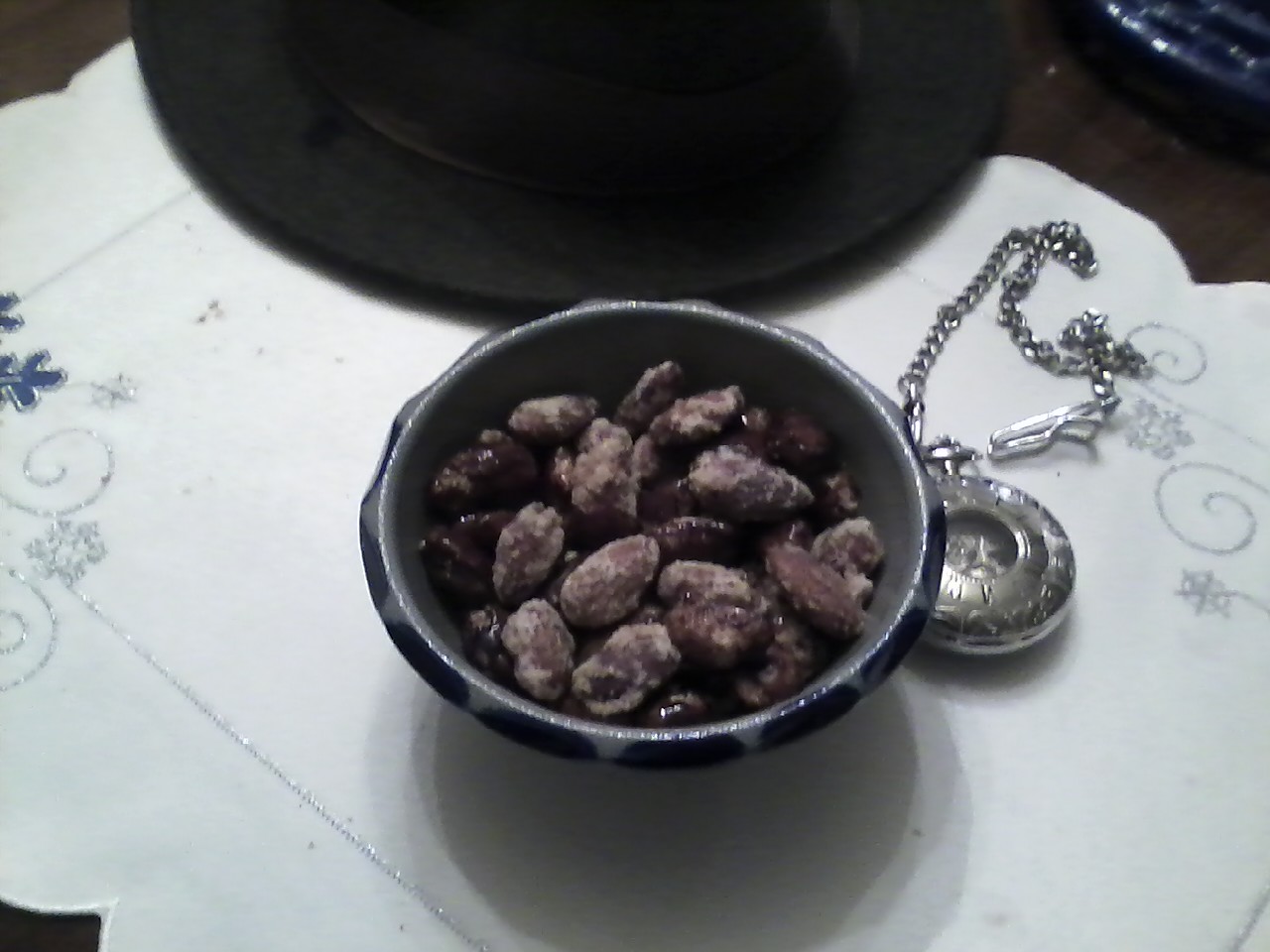
Gebrannte_MandelnThe German name of these is “Gebrannte Mandeln,” which literally means “burnt almonds;” they are something street vendors sold, and they have a unique smell which is a combination of carmelized sugar, toasted almonds, cinnamon, vanilla, and just a hint of rosewater. They are one of the “Proustian” memories of my childhood.

Ingredients:

2 cup toasted whole almonds (if they are raw, toast them in the oven at 350 or so for 20 minutes or so)
1 cup sugar
1 cup water
1/2 tsp. cinnamon
dash vanilla
1 Tbl. rose water (really, this is available at many stores, especially ones with a Middle Eastern customer base)

Step 1, the syrup: In a deep pot, on high heat, combine the sugar and the water, stirring, and stirring , and stirring, until it cooks down to a heavy syrup, and starts to turn brown. This will take  along time, and is quite dangerous, since the hot sugar will scald and blister you if it touches your skin.

Step 2, mixing it up: Add in the cinnamon and the vanilla and mix well, then add the almonds and stir until the almonds are all coated, and the sugar syrup begins to chrystalize or solidify just a bit.

Step 3, mixing it up some more: Add the rosewater; this will seem to melt the syrup again, and repeat the mixing process. Continue to stir (it will be stiff) over a high heat as the sugar begins to solidify, and then past that for just a moment, as the sugar begins to melt and carmelize. Quickly, before the sugar begins to burn, pour the whole thing out on a pan and allow it to cool and to dry.